

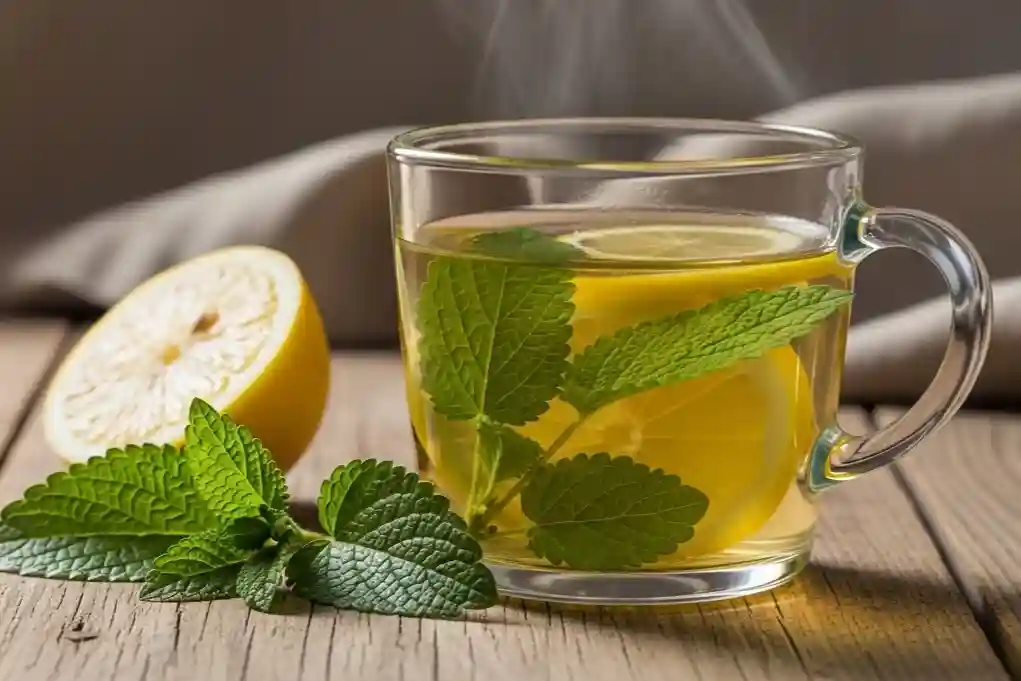
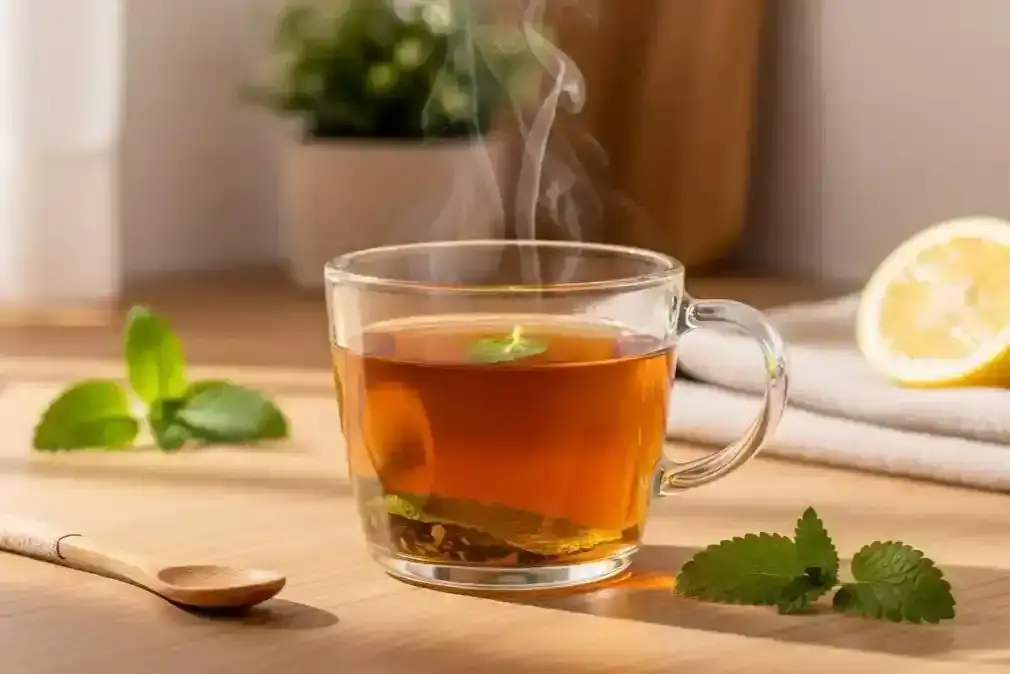
This lemon balm recipe for weight loss is a simple herbal tea made with fresh or dried lemon balm, hot water, lemon, and optional ginger or honey. The leaves steep for 7–10 minutes to make an easy drink you can serve warm. Lemon balm tea has not been proven to cause weight loss or burn body fat, so it is better viewed as a beverage that can fit into an overall weight-management routine rather than as a weight-loss treatment.
Lemon balm (Melissa officinalis) is an herb commonly prepared as a caffeine-free herbal infusion. If weight management is your goal, keeping the tea unsweetened can make it a practical alternative to higher-calorie sweetened drinks. Honey is optional and changes the calorie and sugar content of the recipe.
Quick Takeaways
- The recipe works with either fresh or dried lemon balm.
- Ginger, lemon, and honey are optional additions.
- Unsweetened lemon balm tea can replace higher-calorie sweetened drinks.
- Lemon balm is not a proven fat burner or weight-loss treatment.
How to Make Lemon Balm Tea for Weight Loss
To make lemon balm tea, steep fresh or dried lemon balm leaves in hot water for 7–10 minutes, then strain and add lemon juice. Ginger and honey are optional. This recipe makes a simple herbal infusion, but it should not be treated as a proven weight-loss drink.
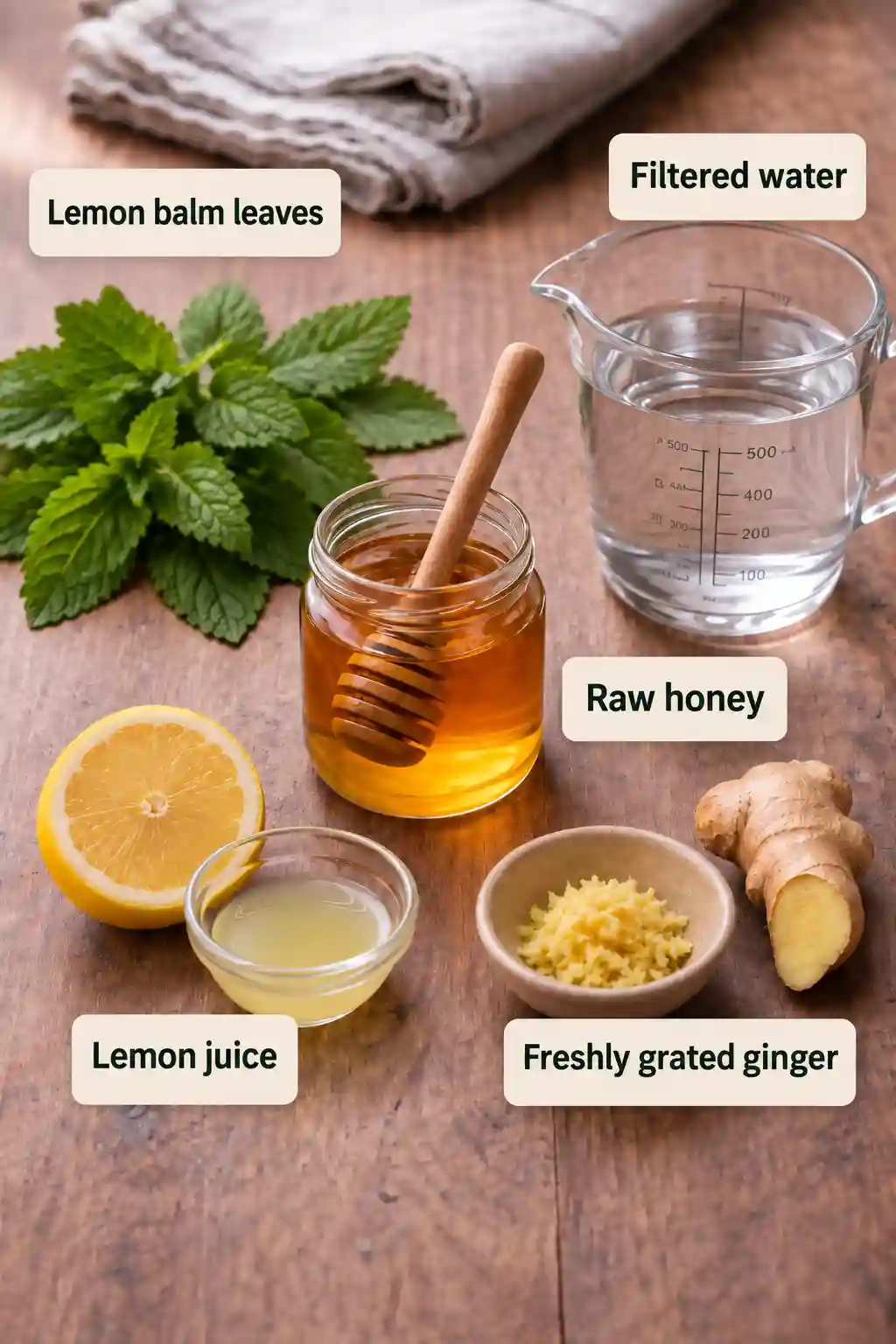
Ingredients
| Ingredient | Amount |
|---|---|
| Fresh lemon balm leaves | 1 cup (or 1 tbsp dried) |
| Freshly grated ginger (optional) | 1 teaspoon |
| Lemon juice | 1 teaspoon |
| Filtered water | 2 cups |
| Raw honey (optional) | 1 teaspoon |
Instructions
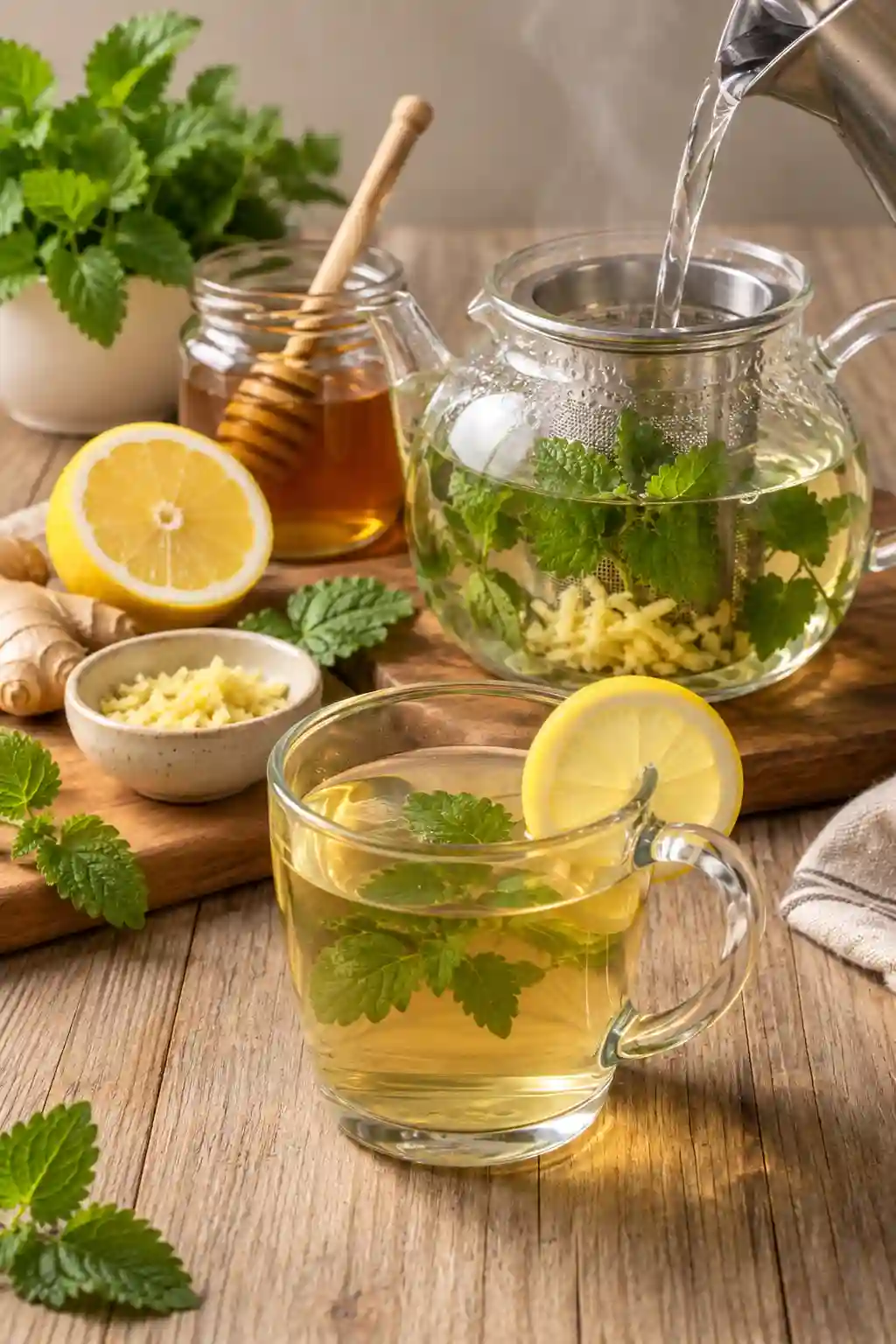
- Bring 2 cups of filtered water to a boil in a pot or kettle.
- Place the lemon balm leaves and grated ginger, if using, in a teapot or tea infuser.
- Pour the hot water over the herbs, cover, and steep for 7–10 minutes.
- Strain the tea into a mug to remove the lemon balm leaves and ginger.
- Stir in the lemon juice and honey, if using.
- Serve warm.
If your goal is to keep the drink lower in added sugar and calories, leave out the honey. The lemon and ginger are optional flavor additions and are not required for the basic lemon balm tea.
Does Lemon Balm Actually Help With Weight Loss?
Evidence is not established that lemon balm tea causes weight loss or burns body fat. Research on Melissa officinalis has explored several health-related effects, but that does not mean a homemade lemon balm infusion has been shown to produce meaningful weight loss.
Some human studies have evaluated concentrated lemon balm extracts or capsules in people with specific health conditions. For example, a randomized clinical trial on lemon balm extract used a hydroalcoholic extract in adults with type 2 diabetes. Those findings cannot be applied directly to homemade tea, because the form, concentration, dose, and study population were different.
The European Medicines Agency’s assessment of Melissa leaf focuses on traditional use for mild stress, sleep support, and certain mild digestive complaints—not on weight loss.
If you want a deeper look at the evidence, limitations, and common claims surrounding this herb, see our guide to lemon balm and weight management.
For practical purposes, unsweetened lemon balm tea can be used as an alternative to sweetened drinks. Any effect on body weight would depend on your overall diet, activity, and long-term energy balance—not on lemon balm itself.
What Is Lemon Balm?
Lemon balm (Melissa officinalis) is a perennial herb in the mint family that is commonly used to make herbal tea. Its leaves have a mild lemon-like aroma, which is why the plant is often used in infusions and other culinary preparations.
Lemon balm is not the same plant as lemongrass or lemon verbena. Although all three can have citrus-like aromas, they come from different botanical species and should not be treated as interchangeable in recipes without adjusting for flavor and preparation.
For this recipe, you can use either fresh lemon balm leaves or dried lemon balm. The amounts are different because dried leaves are more concentrated by volume than fresh leaves.
Fresh vs Dried Lemon Balm
Both fresh and dried lemon balm can be used for this tea. The main difference in this recipe is the amount: use 1 cup fresh lemon balm leaves or 1 tablespoon dried lemon balm with 2 cups of water.
| Factor | Fresh Lemon Balm | Dried Lemon Balm |
|---|---|---|
| Amount for this recipe | 1 cup | 1 tablespoon |
| Water | 2 cups | 2 cups |
| Steep time | 7–10 minutes | 7–10 minutes |
| Preparation | Use washed leaves | Measure directly into the infuser or teapot |
| Convenience | Best when fresh leaves are available | Useful when fresh lemon balm is unavailable |
There is no need to treat one form as better for weight loss. Fresh and dried lemon balm are simply two practical ways to prepare the same type of herbal infusion, and neither has been shown to produce a special weight-loss effect.
Lemon Balm Tea Variations

The basic recipe can be adjusted with a few simple additions, depending on the flavor you prefer. These variations change the taste of the drink, not its proven effect on weight loss.
Ginger Lemon Balm Tea
Add 1 teaspoon freshly grated ginger to the lemon balm before pouring in the hot water. Steep both together for 7–10 minutes, then strain before serving.
Lemon Lemon Balm Tea
Stir in 1 teaspoon lemon juice after straining the tea. This adds a brighter citrus note without changing the basic preparation method.
Honey-Sweetened Lemon Balm Tea
Add 1 teaspoon raw honey after straining, if you prefer a sweeter drink. Honey is optional and adds sugar and calories, so you can leave it out if you want an unsweetened tea.
Iced Lemon Balm Tea
Prepare the tea using the same method, then allow it to cool before refrigerating and serving over ice. Avoid adding extra sweetener unless you want a sweeter drink.
How to Use Lemon Balm Tea in Your Routine?
When Should You Drink Lemon Balm Tea?
There is no established time of day when lemon balm tea works better for weight loss. You can drink it whenever it fits comfortably into your routine.
Some people prefer it between meals or in the evening because it is a caffeine-free herbal tea, but those choices are about convenience and preference rather than a proven fat-loss effect.
If you are using lemon balm tea as an alternative to a sweetened drink, the most practical time to have it is simply when you would otherwise choose that higher-calorie beverage. The overall pattern of your diet matters more for weight management than the timing of this tea.
Can You Drink Lemon Balm Tea Every Day?
Lemon balm tea can be part of a regular routine for some adults, but there is no established daily amount proven to improve weight loss. How often you drink it should not be treated as a weight-loss dosage.
Regular use also deserves more caution than an occasional cup, especially if you take medications, are pregnant or breastfeeding, or have a health condition that could be affected by herbal products.
If you plan to drink lemon balm tea every day for an extended period, it is reasonable to discuss regular use with a healthcare professional, particularly if you take prescription medication.
For weight management, drinking more lemon balm tea does not mean greater weight loss. The drink is best treated as an herbal beverage, not as a supplement or therapeutic dose.
Lemon Balm Tea Safety
Lemon balm is commonly used as an herbal tea, but regular use is not appropriate for everyone. The European Medicines Agency guidance on Melissa leaf notes that safety during pregnancy and breastfeeding has not been established, and it advises against use in children under 12 because of insufficient data.
Lemon balm may also affect alertness in some people. If you feel drowsy after drinking it, avoid driving or operating machinery.
If you take prescription medication, have a thyroid condition, or plan to use lemon balm regularly, check with a healthcare professional before making it part of your routine. Evidence about specific drug interactions is limited, so it is better not to assume that every commonly reported interaction is clinically established.
Lemon Balm Tea Troubleshooting
Why does my lemon balm tea taste too strong?
If the tea tastes stronger than you prefer, dilute it with a little hot water. You can also use the shorter end of the 7–10 minute steeping range the next time you prepare it.
Why does my lemon balm tea taste weak?
Make sure you are using the full recipe amount: 1 cup fresh lemon balm leaves or 1 tablespoon dried lemon balm for 2 cups of water. You can also let the tea steep closer to 10 minutes before straining.
Can I steep lemon balm too long?
A longer steep will make the infusion more concentrated. For this recipe, stay within the recommended 7–10 minute range unless you have tested a longer steep and prefer the result.
Can I use dried lemon balm instead of fresh?
Yes. For this recipe, use 1 tablespoon dried lemon balm in place of 1 cup fresh leaves. Keep the water amount and steeping time the same.
PrintLemon Balm Recipe for Weight Loss
A simple lemon balm herbal tea made with fresh or dried leaves, lemon, and optional ginger or honey. Lemon balm itself has not been proven to cause weight loss or burn body fat.
- Prep Time: 5 minutes
- Cook Time: 10 minutes
- Total Time: 15 minutes
- Yield: About 2 cups 1x
- Category: Drinks
- Method: Steeping
Ingredients
- 1 cup fresh lemon balm leaves (or 1 tbsp dried)
- 1 tsp freshly grated ginger (optional)
- 1 tsp lemon juice
- 2 cups filtered water
- 1 tsp raw honey (optional)
Instructions
- Bring 2 cups of filtered water to a boil in a pot or kettle.
- Place the lemon balm leaves and grated ginger, if using, in a teapot or tea infuser.
- Pour the hot water over the herbs, cover, and steep for 7–10 minutes.
- Strain the tea into a mug to remove the lemon balm leaves and ginger.
- Stir in the lemon juice and honey, if using.
- Serve warm.
Notes
- Honey is optional and adds sugar and calories.
- Use 1 tablespoon dried lemon balm if fresh leaves are unavailable.
- Ginger and lemon are optional flavor additions.
- Nutrition values are estimated per 1-cup serving with the optional honey and ginger included.
- Lemon balm tea is an herbal beverage, not a proven weight-loss treatment.
Nutrition
- Serving Size: 1 cup
- Calories: 12
- Sugar: 3 g
- Sodium: 0 mg
- Fat: 0 g
- Saturated Fat: 0 g
- Unsaturated Fat: 0 g
- Trans Fat: 0 g
- Carbohydrates: 3 g
- Fiber: 0 g
- Protein: 0 g
- Cholesterol: 0 mg
Lemon Balm Recipe FAQs
These frequently asked questions cover a few practical points about lemon balm tea and weight management that are not fully addressed in the main sections above.
Is Lemon Balm as Good as Ozempic?
No. Lemon balm tea is not comparable to Ozempic. Ozempic contains semaglutide, a prescription GLP-1 medication. Lemon balm is an herbal infusion, and there is no reliable evidence that it works like semaglutide, causes comparable weight loss, or can replace prescription treatment.
Does lemon balm burn belly fat?
No. Lemon balm has not been shown to target belly fat or cause spot fat loss. Changes in body fat depend on overall energy balance and long-term lifestyle factors, not on one specific herbal tea.
How much lemon balm should I use per cup?
For this recipe, use the equivalent of ½ cup fresh lemon balm leaves or ½ tablespoon dried lemon balm per cup of water. The full recipe uses double those amounts for 2 cups of water.
Can lemon balm tea replace a weight-loss drink or supplement?
No. Lemon balm tea is an herbal beverage, not a weight-loss treatment or supplement replacement. It can fit into a routine as an unsweetened drink, but it should not be expected to produce weight loss on its own.
Final Takeaway
Lemon balm tea is a simple herbal drink that can fit into a weight-management routine, especially when served without added sweeteners. However, there is no reliable evidence that lemon balm itself causes weight loss, burns fat, or works like a weight-loss medication.
Use this recipe for its simplicity and flavor rather than expecting a specific change on the scale. For weight management, your overall eating pattern, activity, sleep, and other long-term habits matter far more than any single drink
Update note: Updated in September 2026 with clearer recipe guidance, evidence-based weight-loss context, and safety information.







Great!