
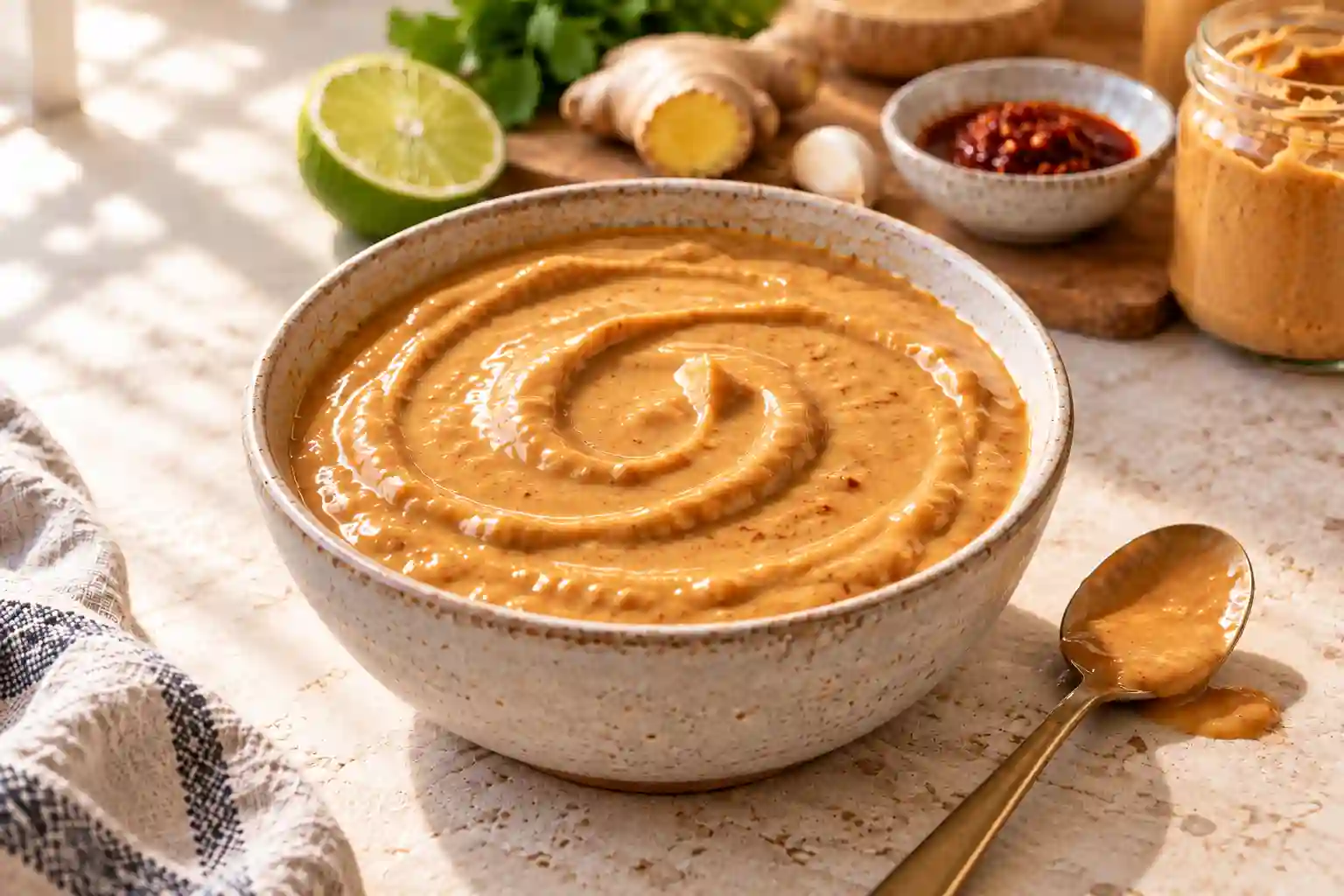
This easy peanut sauce recipe is made by whisking creamy peanut butter with soy sauce, rice vinegar, lime juice, brown sugar, garlic, ginger, chili garlic sauce, and toasted sesame oil, then adding warm water until the sauce reaches the consistency you want.
Use less water for a thicker peanut dipping sauce for spring rolls or vegetables, or add more for a looser sauce that works well with noodles, rice bowls, salads, or drizzling. Once the sauce is smooth, taste it and adjust the lime juice, chili garlic sauce, or soy sauce as needed.
At a Glance
- No-cook, one-bowl recipe: This peanut sauce comes together by whisking the ingredients in a bowl, with no blender or cooking required.
- Ready in 7 minutes: The full preparation takes about 7 minutes from start to finish.
- Adjustable consistency: Start with less warm water for a thicker dipping sauce, then add more gradually for noodles, bowls, or drizzling.
- Easy flavor adjustments: Add more lime for brightness, chili garlic sauce for heat, or a small splash of soy sauce for a more savory flavor.
- Versatile use: Serve it with spring rolls, vegetables, noodles, rice bowls, or salads.
- Built around simple ingredients: Peanut butter, soy sauce, lime, ginger, garlic, chili garlic sauce, and sesame oil form the base.
What Is Peanut Sauce?
Peanut sauce is a savory-sweet sauce made with peanuts or peanut butter combined with salty, acidic, sweet, and aromatic ingredients. Its consistency can range from thick and spoonable for dipping to thinner and pourable for noodles, bowls, vegetables, or spring rolls.
Peanut Sauce Recipe Ingredients
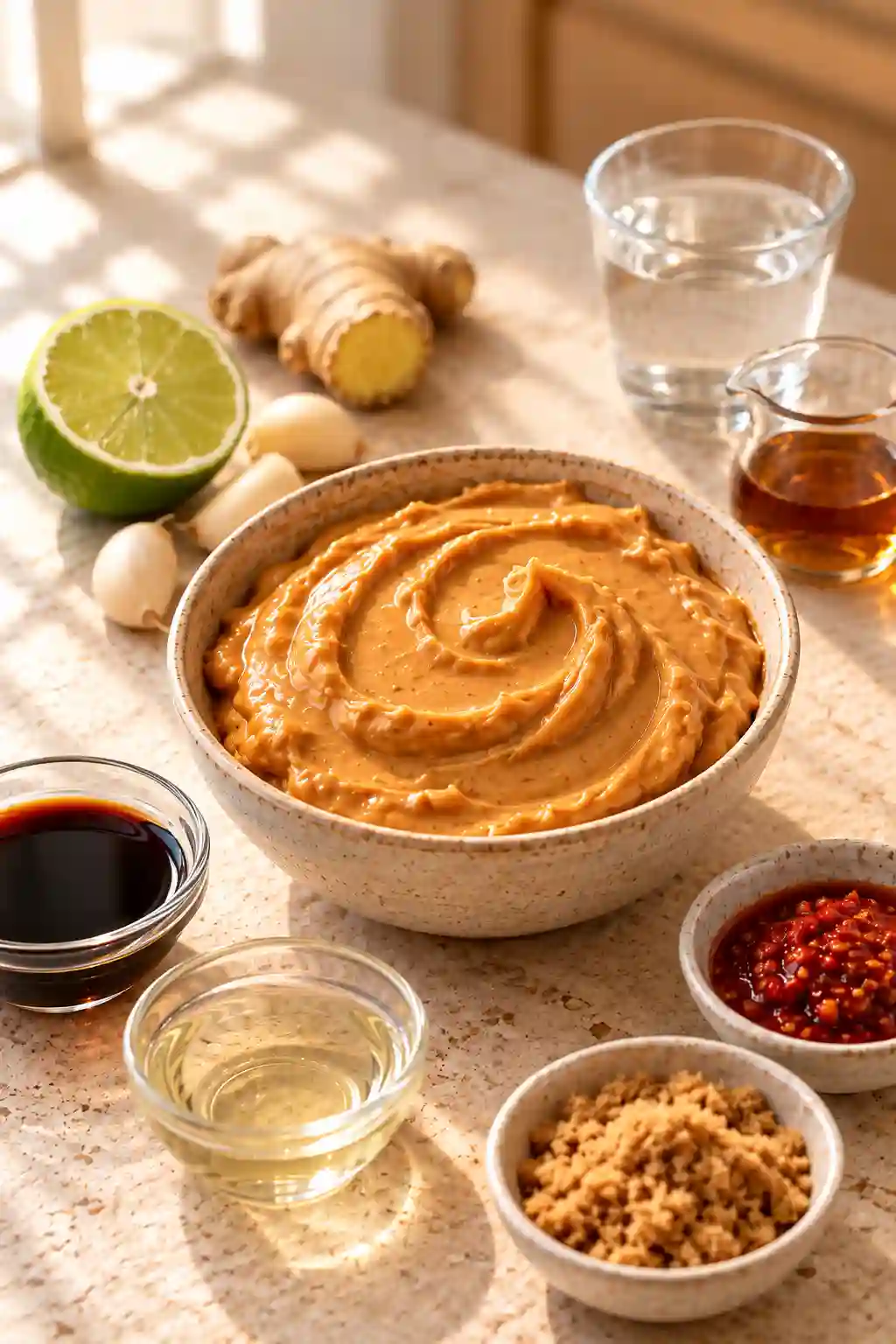
Peanut sauce is built around creamy peanut butter, a savory seasoning, acidity, a touch of sweetness, aromatics, and enough liquid to reach the right consistency. This version uses soy sauce, rice vinegar, lime juice, brown sugar, garlic, ginger, chili garlic sauce, sesame oil, and warm water.
| Ingredient | Amount | Role in the Recipe |
|---|---|---|
| Natural creamy peanut butter, unsweetened | 1/3 cup | Forms the creamy base and gives the sauce most of its body |
| Low-sodium soy sauce | 2 tablespoons | Adds savory, salty flavor and balances the richness of the peanut butter |
| Rice vinegar | 1 tablespoon | Adds acidity and helps balance the richness of the sauce |
| Brown sugar | 1 tablespoon | Adds sweetness to balance the salty, acidic, and spicy ingredients |
| Fresh lime juice | 1 1/2 tablespoons | Adds fresh acidity and brightness |
| Garlic | 3 cloves, finely grated or pressed | Adds savory aromatic flavor |
| Fresh ginger | 1 tablespoon plus 1 teaspoon, finely grated | Adds fresh aromatic flavor and gentle sharpness |
| Chili garlic sauce | 2 teaspoons | Adds heat along with extra garlic and savory flavor |
| Toasted sesame oil | 1/2 teaspoon | Adds a concentrated toasted, nutty note |
| Warm water | 3–5 tablespoons, as needed | Thins the sauce gradually so you can adjust it for dipping, drizzling, or coating |
Allergen note: This recipe contains peanuts, soy, and sesame. If you are cooking for someone with food allergies, check the ingredient labels carefully; the FDA identifies all three as major food allergens.
Choosing the Peanut Butter
Use natural creamy peanut butter without added sweetener for this recipe, since the brown sugar already controls the sweetness. Stir the peanut butter well before measuring if the oil has separated.
For general ingredient composition data, USDA FoodData Central includes reference entries for creamy peanut butter.
Why This Recipe Uses Both Lime Juice and Rice Vinegar
Lime juice and rice vinegar both add acidity, but they contribute different flavors. Lime juice brings fresh citrus brightness, while rice vinegar adds a softer tang. Together, they help balance the richness of the peanut butter without relying too heavily on a single acidic ingredient.
How to Make This Peanut Sauce Recipe
To make peanut sauce, whisk the peanut butter with the soy sauce, rice vinegar, brown sugar, lime juice, garlic, ginger, chili garlic sauce, and toasted sesame oil until smooth. Then add warm water gradually until the sauce reaches the consistency you need.
This is a no-cook peanut sauce, so no simmering or reduction is required. The consistency is controlled by the peanut butter and the amount of warm water added.
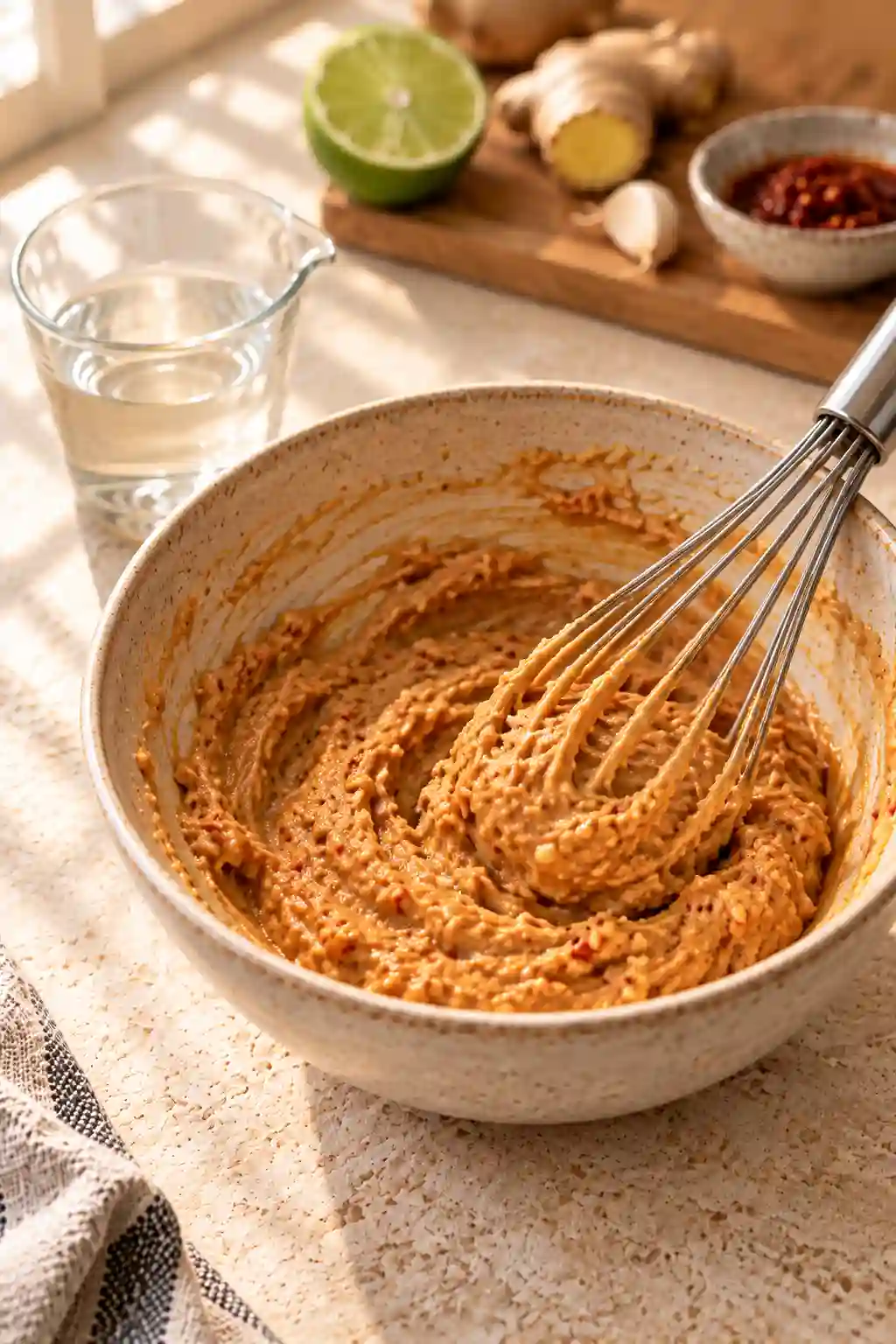
- Combine the ingredients. Add the peanut butter, soy sauce, rice vinegar, brown sugar, lime juice, garlic, ginger, chili garlic sauce, and toasted sesame oil to a medium bowl.
- Whisk until smooth. Mix thoroughly until the ingredients are fully combined. The sauce may look thick at first, but it will become smoother and creamier as you continue whisking.
- Add warm water gradually. Add the water 1 tablespoon at a time, whisking well after each addition. Use about 3 tablespoons for a thicker dipping sauce, or continue toward 5 tablespoons for a thinner sauce suitable for drizzling or coating.
- Taste and adjust. Add more lime juice for extra brightness, more chili garlic sauce for additional heat, or a small splash of soy sauce for a more savory flavor.
- Serve or refrigerate. Use the sauce right away, or refrigerate it until needed. If it thickens after chilling, whisk in a small amount of warm water until it returns to the consistency you want.
The Key to a Smooth Peanut Sauce
Add the warm water slowly instead of pouring it in all at once. This gives you more control over the texture and makes it easier to stop when the sauce reaches the right consistency for your intended use.
A thicker sauce works better for dipping, while a looser consistency is easier to drizzle over noodles, rice bowls, vegetables, or salads.
How to Adjust Peanut Sauce Consistency
The easiest way to control peanut sauce consistency is to add warm water gradually. Start with 3 tablespoons for a thicker sauce, then whisk in more water 1 tablespoon at a time until it reaches the texture you need.
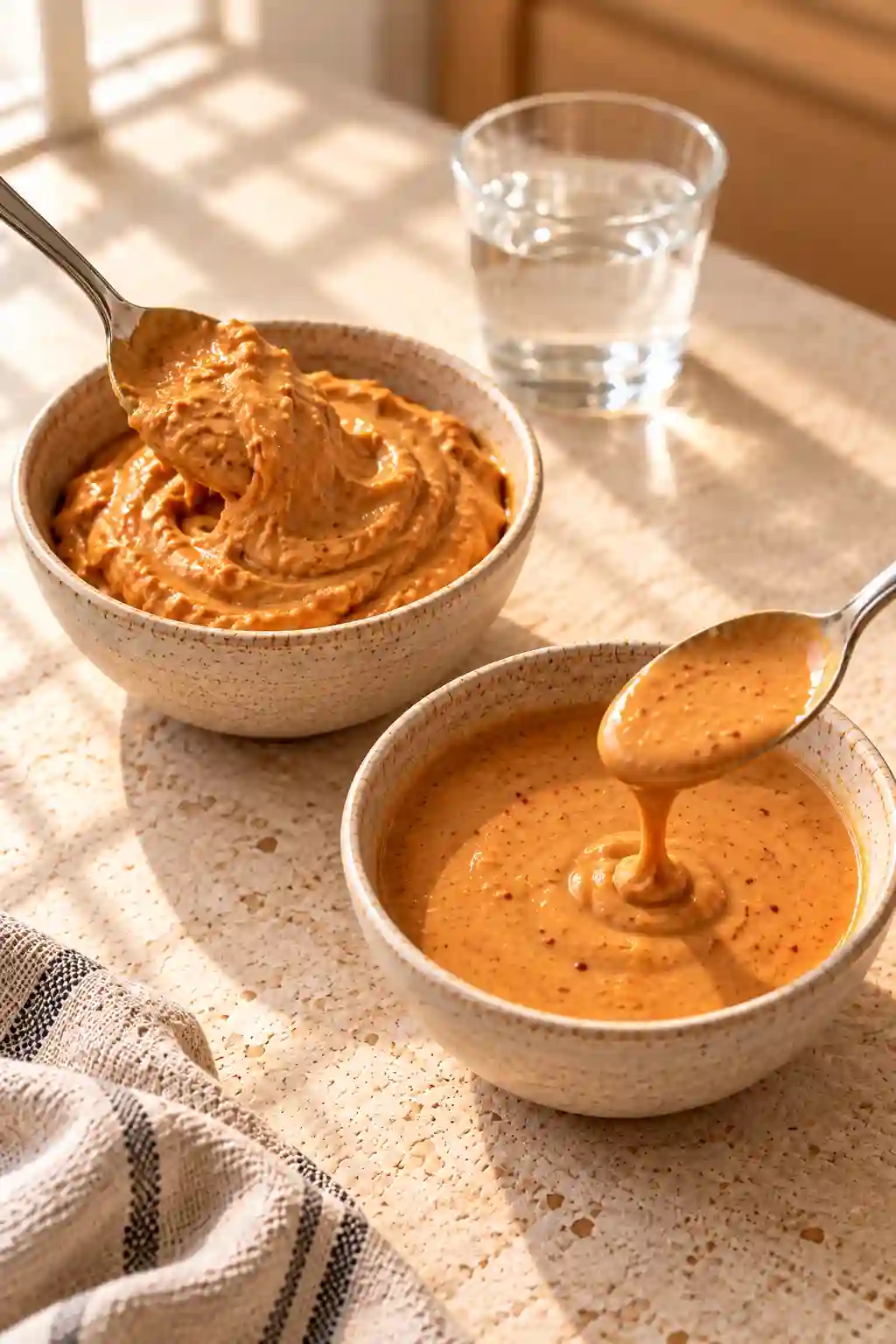
| How You’re Using It | Target Consistency | How to Adjust It | Visual Cue |
|---|---|---|---|
| Dipping sauce | Thick and creamy | Start with about 3 tablespoons of warm water and stop once the sauce is smooth enough for dipping | Sits on the spoon and clings to dipped food without running off quickly |
| Spring rolls or fresh rolls | Creamy but easy to dip into | Add warm water gradually until the sauce clings lightly without feeling overly thick | Coats the edge of a spring roll without sliding off immediately |
| Noodles | Loose enough to coat evenly | Continue adding water toward the higher end of the 3–5 tablespoon range as needed | Spreads easily over noodles and coats them without forming thick clumps |
| Rice bowls or vegetables | Pourable but still creamy | Whisk in additional warm water a little at a time until the sauce drizzles easily | Falls slowly from a spoon in a smooth stream |
| Salad or dressing-style use | Thin and easily pourable | Work gradually toward 5 tablespoons of water, stopping when the sauce pours easily | Drizzles in a steady stream and spreads easily when tossed |
If Your Peanut Sauce Is Too Thick
Whisk in warm water 1 tablespoon at a time. Mixing after every addition is important because even a small amount of water can noticeably loosen the peanut butter base.
If Your Peanut Sauce Becomes Too Thin
Avoid adding all 5 tablespoons of water at once. The recipe is easier to control when you begin with the lower amount and thin it gradually, which helps prevent the sauce from becoming looser than intended.
After Refrigeration
If the peanut sauce thickens after chilling, whisk in a small amount of warm water before serving. Add only a little at a time until the sauce returns to the consistency you need.
How to Adjust the Flavor of Peanut Sauce
Once the peanut sauce is fully mixed, taste it before making any changes. From there, you can fine-tune the balance depending on whether you want the sauce to taste brighter, hotter, more savory, or slightly milder.
- For a brighter finish: Whisk in a little more fresh lime juice. The extra acidity can make the sauce taste fresher and cut through some of the peanut butter’s richness.
- For extra heat: Add a small amount of chili garlic sauce, mix well, and taste before adding more.
- For deeper savory flavor: Stir in a small splash of low-sodium soy sauce. Add it sparingly so the sauce does not become overly salty.
- For a milder overall flavor: Whisk in a little warm water. This reduces the concentration of the seasonings while also making the sauce slightly thinner.
Make Adjustments a Little at a Time
Taste the sauce after each addition rather than changing several ingredients at once. This makes it easier to identify what the sauce needs and helps you keep the balance between the peanut butter, acidity, saltiness, sweetness, and heat.
The way you plan to serve the sauce also matters. A thicker dipping sauce can stay more concentrated, while a sauce intended for noodles, rice bowls, or drizzling will naturally become lighter in flavor as more water is added.
Peanut Sauce Variations
The base recipe is flexible enough to work as a dipping sauce, a spicier condiment, or a thinner sauce for bowls and noodles. Keep the main recipe unchanged, then adjust only what is needed for the way you plan to serve it.
If you like making versatile condiments at home, you can also explore more sauce recipes for different meals and serving styles.
Spicy Peanut Sauce
For a spicier peanut sauce, add a little more chili garlic sauce after the base recipe is fully mixed. Stir well and taste before adding more so the heat does not overwhelm the peanut flavor, lime, and ginger.
If the added chili sauce makes the mixture feel thicker or more concentrated, whisk in a small amount of warm water until the texture is where you want it.
Peanut Sauce for Spring Rolls
For spring rolls or fresh rolls, keep the sauce creamy enough to cling to each bite without being difficult to dip into.
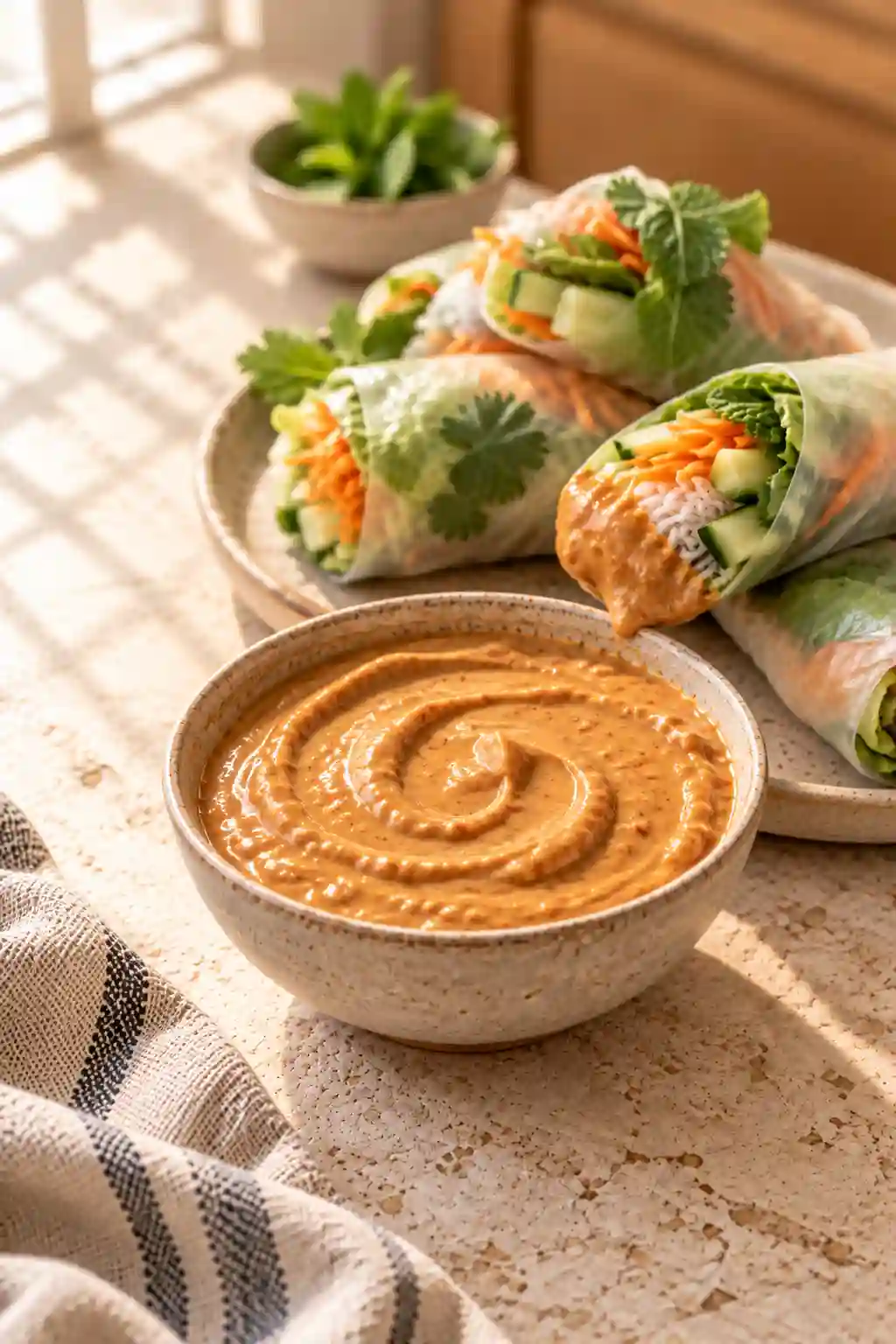
Start with about 3 tablespoons of warm water, then add more gradually only if needed. The goal is a smooth, spoonable consistency rather than a thin dressing-style sauce.
The lime juice, ginger, garlic, and chili garlic sauce already in the recipe give the dip enough contrast to balance the richness of the peanut butter without requiring a separate spring-roll recipe.
Thai-Style Peanut Sauce
This recipe can be used as a Thai-style peanut sauce, but it should not be presented as an authentic or traditional Thai recipe without specific cultural and recipe verification.
For a Thai-style serving direction, use the sauce with noodles, vegetables, rice bowls, or grilled foods and adjust the lime and chili to suit the dish. The recipe already includes several flavor elements commonly associated with Southeast Asian-style peanut sauces, but the exact ingredients and proportions can vary widely.
About 3- or 4-Ingredient Peanut Sauce
A simplified peanut sauce can be made with fewer ingredients, but this recipe is intentionally built with peanut butter, savory seasoning, acidity, sweetness, aromatics, and chili for a fuller balance.
Because no separate 3- or 4-ingredient version was provided or tested, this article does not give a shortcut formula that could be less reliable than the main recipe.
What to Serve With Peanut Sauce
Peanut sauce works best with foods that benefit from a creamy, savory, tangy dip or drizzle. Keep it thicker for dipping and thin it gradually when you want it to coat or pour more easily.
- Spring rolls and fresh rolls: Serve the sauce on the side with a creamy dipping consistency so it clings without running off.
- Noodles: Thin the sauce with warm water until it coats the noodles evenly without becoming heavy.
- Rice bowls: Drizzle it over rice, vegetables, and proteins for a creamy, savory finish.
- Vegetables: Use it as a dip for raw vegetables or spoon it over cooked or roasted vegetables.
- Salads: Thin the sauce toward the looser end of the recipe’s water range so it can be tossed more easily with the other ingredients.
- Grilled foods: Serve it as a dipping sauce or spoon a small amount over grilled vegetables or proteins.
If you are building a meal around different dipping sauces, TastyMillions also has a recipe for yum yum sauce, which offers a very different flavor profile from this peanut-based sauce.
How to Store Peanut Sauce
Store leftover peanut sauce in a covered container in the refrigerator and use it within 3 days. Because this recipe contains fresh lime juice, garlic, and ginger, keep it chilled rather than leaving it at room temperature for extended periods.
How to Restore the Consistency
The sauce may become thicker after chilling. Before serving, stir or whisk it well, then add a small amount of warm water if needed.
Add the water gradually rather than all at once. This helps loosen the sauce without making it thinner than you intended.
Before Serving Again
Give the sauce a quick stir and check both the texture and flavor before serving. If it is too thick, add a little warm water; if the flavor needs more brightness or heat, make a small adjustment with lime juice or chili garlic sauce.
Storage note: An exact refrigerator storage period is not included here because no verified shelf-life data or recipe-specific storage test was provided for this batch.
PrintEasy Peanut Sauce Recipe
A creamy peanut sauce made with peanut butter, soy sauce, lime juice, rice vinegar, garlic, ginger, chili garlic sauce, and toasted sesame oil. Add warm water gradually to adjust the consistency for dipping, noodles, bowls, or drizzling.
- Prep Time: 7 minutes
- Cook Time: 0 minutes
- Total Time: 7 minutes
- Yield: 1 cup (8 servings) 1x
- Category: Sauce
- Method: No-Cook / Whisking
Ingredients
- 1/3 cup natural creamy peanut butter, unsweetened
- 2 tablespoons low-sodium soy sauce
- 1 tablespoon rice vinegar
- 1 tablespoon brown sugar
- 1 1/2 tablespoons fresh lime juice
- 3 garlic cloves, finely grated or pressed
- 1 tablespoon plus 1 teaspoon fresh ginger, finely grated
- 2 teaspoons chili garlic sauce
- 1/2 teaspoon toasted sesame oil
- 3–5 tablespoons warm water, as needed
Instructions
- Add the peanut butter, soy sauce, rice vinegar, brown sugar, lime juice, garlic, ginger, chili garlic sauce, and toasted sesame oil to a medium bowl.
- Whisk until smooth and fully combined. The mixture may look thick at first, but it will become creamy as you continue whisking.
- Add warm water, 1 tablespoon at a time, whisking well after each addition. Use about 3 tablespoons for a thick dipping sauce or up to 5 tablespoons for a thinner sauce or dressing.
- Taste the sauce and adjust as needed. Add more lime juice for brightness, chili garlic sauce for extra heat, or a small splash of soy sauce for more savory flavor.
- Serve immediately, or refrigerate until ready to use. If the sauce thickens after chilling, whisk in a little warm water until it reaches your desired consistency.
Notes
- This is a no-cook peanut sauce, so no simmering or reduction is required.
- Nutrition values are calculated estimates based on a 1-cup yield made with 3 tablespoons of warm water and divided into 8 servings of 2 tablespoons each.
- Add the warm water gradually so you can control the final consistency.
- Use less water for a thicker dipping sauce and more for noodles, bowls, or drizzling.
- Stir natural peanut butter well before measuring if the oil has separated.
Nutrition
- Serving Size: 2 tablespoons
- Calories: 80
- Sugar: 3.1 g
- Sodium: 131 mg
- Fat: 5.8 g
- Saturated Fat: 1.2 g
- Unsaturated Fat: 4.7 g
- Trans Fat: 0 g
- Carbohydrates: 5.4 g
- Fiber: 0.6 g
- Protein: 2.8 g
- Cholesterol: 0 mg
Peanut Sauce FAQ
These quick answers cover a few common peanut sauce questions that are not fully addressed in the main recipe, including ingredient omissions and the difference between peanut sauce and satay sauce.
Can I make peanut sauce without coconut milk?
Yes. Coconut milk is not required for this recipe. Warm water is used instead to loosen the peanut butter mixture and control the consistency. Add it gradually until the sauce is thick enough for dipping or loose enough for noodles and drizzling.
Can I make peanut sauce without ginger?
Yes. You can leave out the fresh ginger if you do not have it or prefer a sauce without its sharp, aromatic flavor. The peanut butter, soy sauce, lime juice, rice vinegar, garlic, chili garlic sauce, brown sugar, and sesame oil will still provide the main flavor structure of the sauce.
Can I make peanut sauce without soy sauce?
You can make a peanut sauce without soy sauce, but the recipe will need another savory, salty component to replace the role it plays here. Because an alternative was not tested for this specific recipe, use a substitution you already know works for your dietary needs and adjust it gradually to taste rather than assuming a direct 1:1 replacement.
Can I make peanut sauce ahead of time?
Yes. You can make this peanut sauce ahead of time and refrigerate it until needed. The sauce may thicken as it chills, so whisk it before serving and add a small amount of warm water if needed to restore the desired consistency.
What is the difference between satay sauce and peanut sauce?
Peanut sauce is a broad term for sauces made with peanuts or peanut butter, while satay sauce usually refers to a peanut-based sauce served with satay-style dishes. The two terms are often used interchangeably, but the ingredients and preparation can vary depending on the recipe and culinary tradition. This recipe is best described simply as a peanut sauce.
Final Thoughts
This peanut sauce recipe is easy to adapt for different meals. Keep it thick when you want a dip, or whisk in extra warm water for a smoother sauce that works better with noodles, bowls, or drizzling.
Taste the sauce after mixing, then fine-tune only what it needs. A little more lime can brighten it, extra chili garlic sauce can increase the heat, and a small splash of soy sauce can deepen the savory flavor without changing the basic recipe.