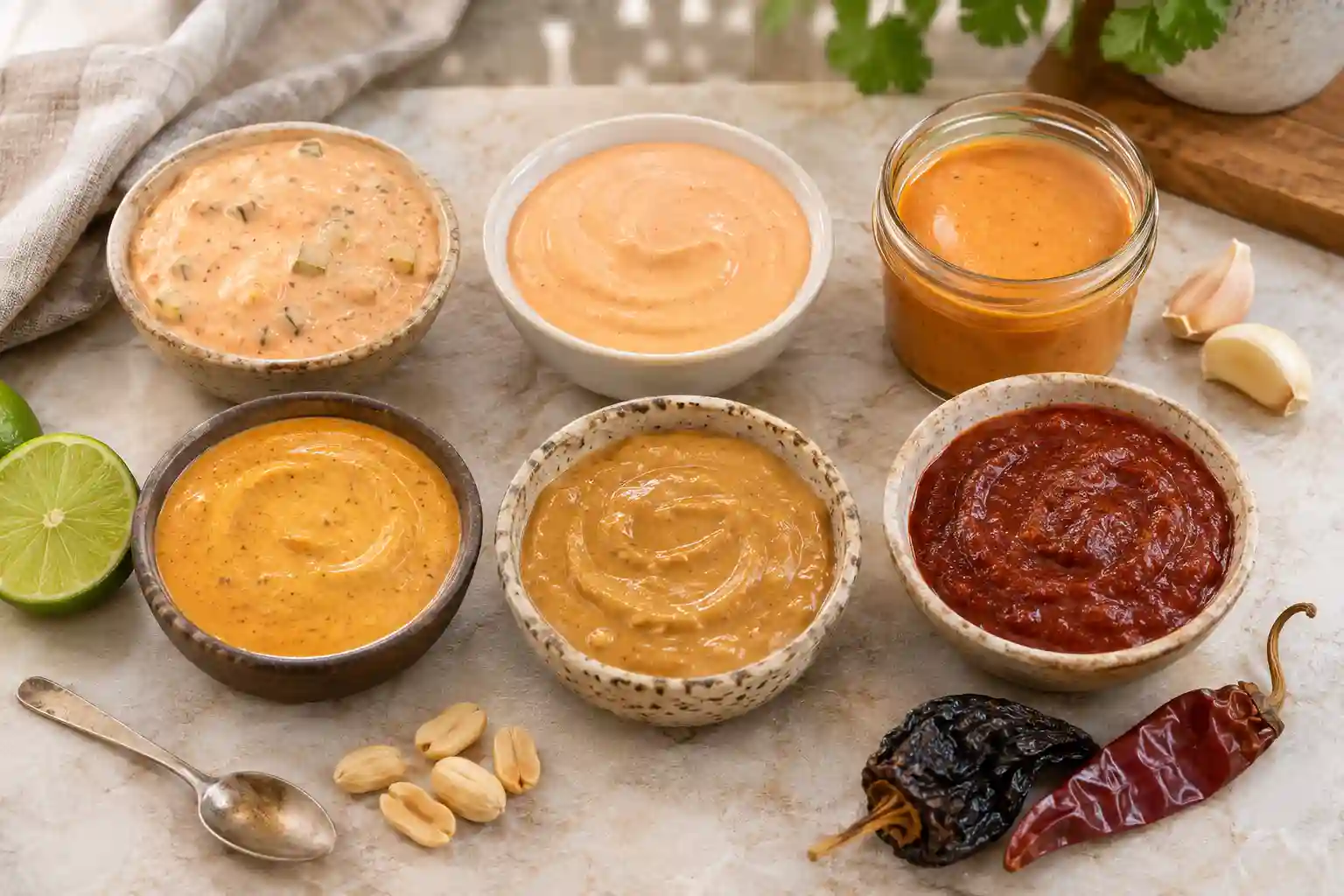

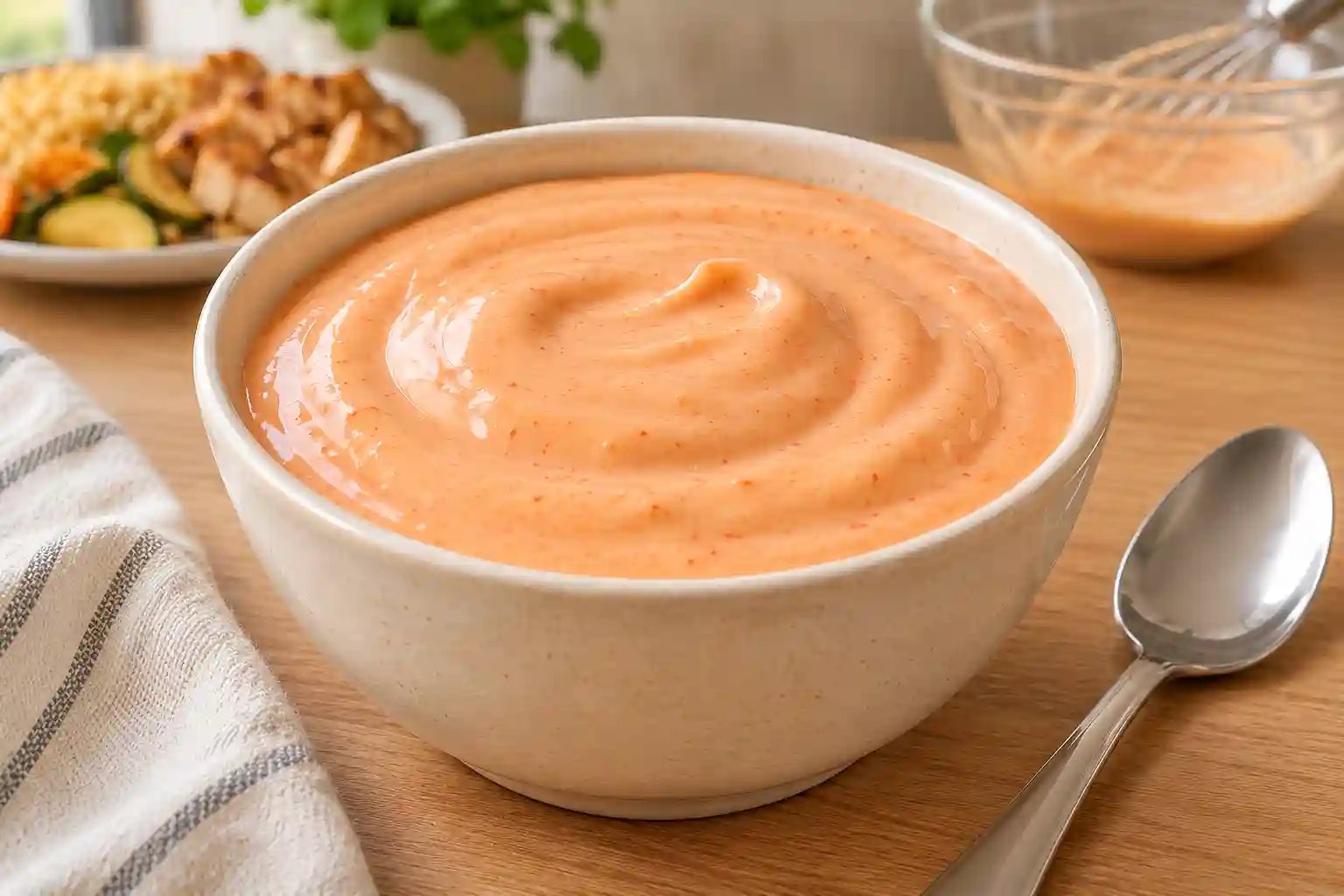
This yum yum sauce recipe combines mayonnaise, ketchup, rice vinegar, sugar, paprika, and garlic powder to make a creamy, mildly sweet, and tangy Japanese steakhouse-style dipping sauce. Simply whisk the ingredients together, adjust the consistency with a little water, and refrigerate for at least one hour before serving.
Often called hibachi sauce, Japanese white sauce, or shrimp sauce, yum yum sauce is commonly served with grilled chicken, steak, shrimp, fried rice, and vegetables at Japanese-American steakhouses.
This homemade version uses regular mayonnaise and ketchup, with no butter required. You can keep it thick for dipping or gradually add water for a thinner, pourable consistency. For a spicy variation, add a little Sriracha; for a subtle nutty note, use a small amount of toasted sesame oil.
Key Takeaways
- Simple ingredients: This homemade yum yum sauce uses mayonnaise, ketchup, rice vinegar, sugar, paprika, garlic powder, and salt.
- Preparation and chilling: Allow approximately 5 minutes to prepare the sauce, plus at least 1 hour of refrigeration before serving. Preparation time is an estimate.
- Adjustable consistency: Start with 1 tablespoon of water, then add more 1 teaspoon at a time for a thinner, pourable sauce.
- Flavor and variations: The sauce is creamy, mildly sweet, and tangy. Add ½–1 teaspoon of Sriracha for heat or ¼ teaspoon of toasted sesame oil for a nutty variation.
- Serving ideas: Serve with hibachi chicken, grilled shrimp, steak, fried rice, vegetables, or fries.
What Is Yum Yum Sauce?
Yum yum sauce is a creamy, mayonnaise-based dipping sauce commonly served at Japanese-American hibachi and steakhouse restaurants. Its mildly sweet, tangy flavor comes from a combination of mayonnaise, a tomato-based ingredient such as ketchup, vinegar, and seasonings.
The sauce is often called hibachi sauce, Japanese white sauce, or shrimp sauce. Despite these different names, it generally refers to the pink-orange dipping sauce served alongside grilled chicken, steak, shrimp, rice, and vegetables.
Is Yum Yum Sauce Actually Japanese?
Yum yum sauce is primarily associated with Japanese-American steakhouses rather than traditional Japanese cuisine. Although it is served in Japanese-style hibachi restaurants across the United States, its exact origins are not firmly established.
The sauce reflects the Japanese-American steakhouse dining style, where creamy dipping sauces accompany grilled meats, seafood, and vegetables.
Is Yum Yum Sauce the Same as Japanese White Sauce?
Yes, Japanese white sauce is a common alternative name for yum yum sauce in American hibachi restaurants. The name can be misleading because the sauce is typically pale pink or light orange rather than pure white.
The color comes from ingredients such as ketchup and paprika. Recipes vary between restaurants, but most versions share a creamy mayonnaise base with mild sweetness, acidity, and savory seasonings.
Yum Yum Sauce Ingredients
This homemade yum yum sauce combines a creamy mayonnaise base with ketchup, rice vinegar, sugar, and pantry seasonings. Each ingredient plays a specific role in balancing the sauce’s flavor, color, and consistency.
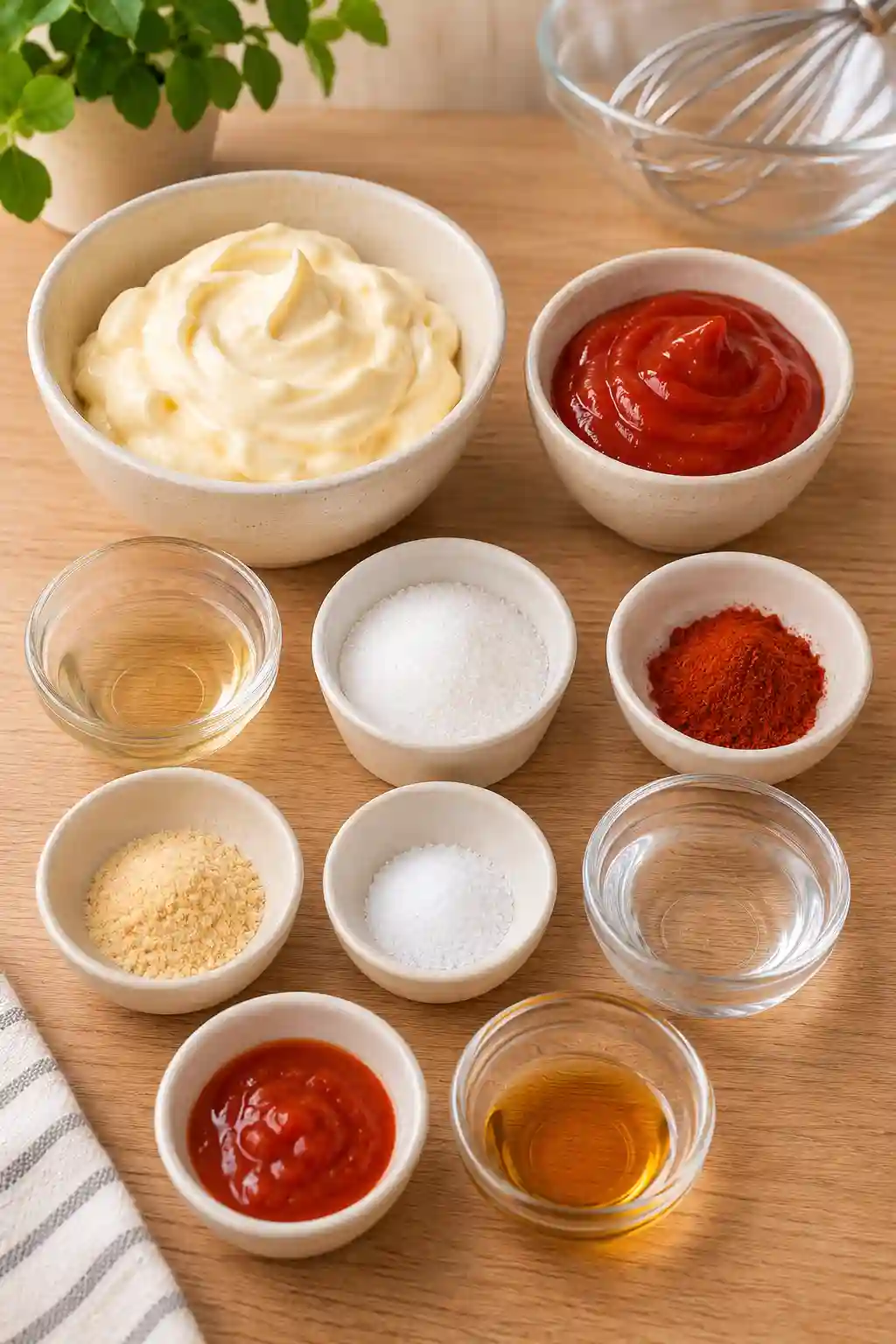
| Ingredient | Amount | Role in the Recipe |
|---|---|---|
| Mayonnaise | 1 cup (230 g) | Creates the creamy base and smooth texture. |
| Ketchup | 2 tablespoons | Adds mild tomato flavor, sweetness, and a pink-orange color. |
| Granulated sugar | 2 teaspoons | Balances the vinegar’s acidity and adds sweetness. |
| Rice vinegar (unseasoned) | 1 tablespoon | Adds tanginess and balances the richness of the mayonnaise. |
| Regular paprika | 1 teaspoon | Adds mild pepper flavor and warm color without smokiness. |
| Garlic powder | 1 teaspoon | Provides garlic flavor without changing the smooth texture. |
| Fine salt | ¼ teaspoon | Enhances the seasonings and overall flavor. |
| Water | 1 tablespoon, plus more as needed | Adjusts the sauce from a thick dip to a thinner, pourable consistency. |
| Sriracha (optional) | ½–1 teaspoon | Adds chili heat for a spicy variation. |
| Toasted sesame oil (optional) | ¼ teaspoon | Adds a subtle toasted, nutty flavor. |
Mayonnaise tip: This recipe uses regular mayonnaise as its base. Kewpie mayonnaise is another option, but its seasoning and acidity can differ from regular mayonnaise, which may change the sauce’s flavor. If you substitute Kewpie, start with the same volume (1 cup), then taste before adjusting the sugar or rice vinegar. This substitution has not been tested in this recipe.
Ingredient tip: Start with the listed amount of water, then add more 1 teaspoon at a time if you prefer a thinner hibachi-style sauce. The Sriracha and toasted sesame oil are optional; neither is needed for the basic recipe.
How to Make Yum Yum Sauce
Making homemade yum yum sauce requires just a mixing bowl and a whisk. The key is to combine the ingredients thoroughly, add water gradually to control the consistency, and refrigerate the sauce before serving.
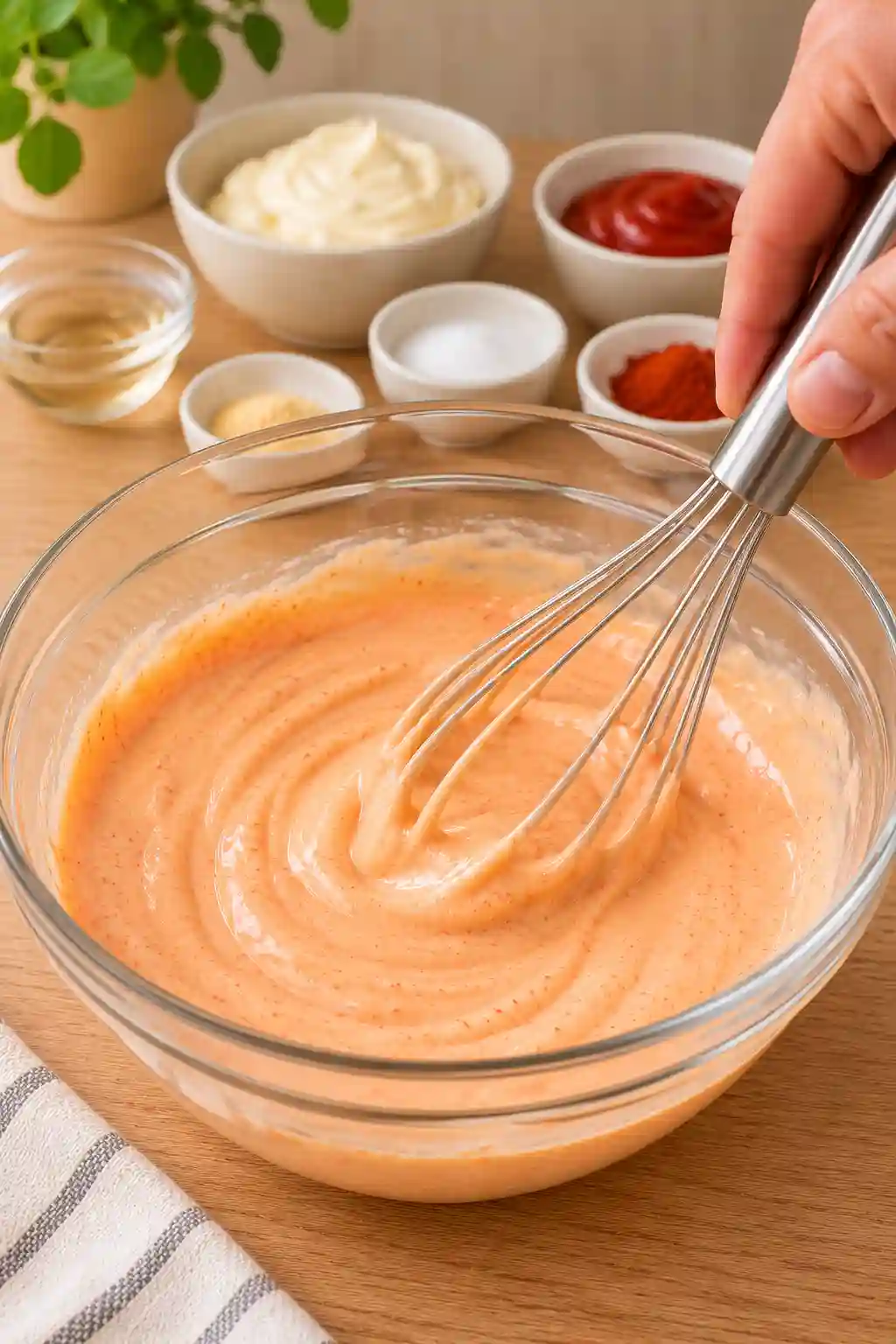
Step 1 – Combine the Ingredients
In a medium mixing bowl, add 1 cup (230 g) mayonnaise, 2 tablespoons ketchup, 2 teaspoons granulated sugar, 1 tablespoon rice vinegar, 1 teaspoon regular paprika, 1 teaspoon garlic powder, and ¼ teaspoon fine salt.
Step 2 – Whisk Until Smooth
Whisk the ingredients for 30–60 seconds, until the mixture is smooth and evenly combined.
Make sure the sugar is well incorporated and no visible streaks of ketchup or paprika remain.
Step 3 – Adjust the Consistency
Add 1 tablespoon of water and whisk until incorporated.
For a thinner, more pourable hibachi-style sauce, add additional water 1 teaspoon at a time, whisking after each addition.
Stop when the sauce reaches your preferred consistency for dipping or drizzling.
Step 4 – Taste and Adjust
Taste the sauce before refrigerating and adjust the seasonings if needed.
- For more tanginess: Add a small amount of rice vinegar.
- For more sweetness: Stir in a little additional sugar.
- For extra heat: Add ½–1 teaspoon of Sriracha.
- For a subtle nutty flavor: Add ¼ teaspoon of toasted sesame oil.
Whisk again after making any adjustments.
Step 5 – Refrigerate Before Serving
Cover the bowl or transfer the sauce to a clean, airtight container.
Refrigerate for at least 1 hour before serving to give the ingredients time to blend.
You can also prepare the sauce several hours ahead or refrigerate it overnight.
Stir briefly before serving. If the sauce is thicker than you’d like, whisk in a small amount of water until it reaches your desired consistency.
How to Get the Right Yum Yum Sauce Consistency
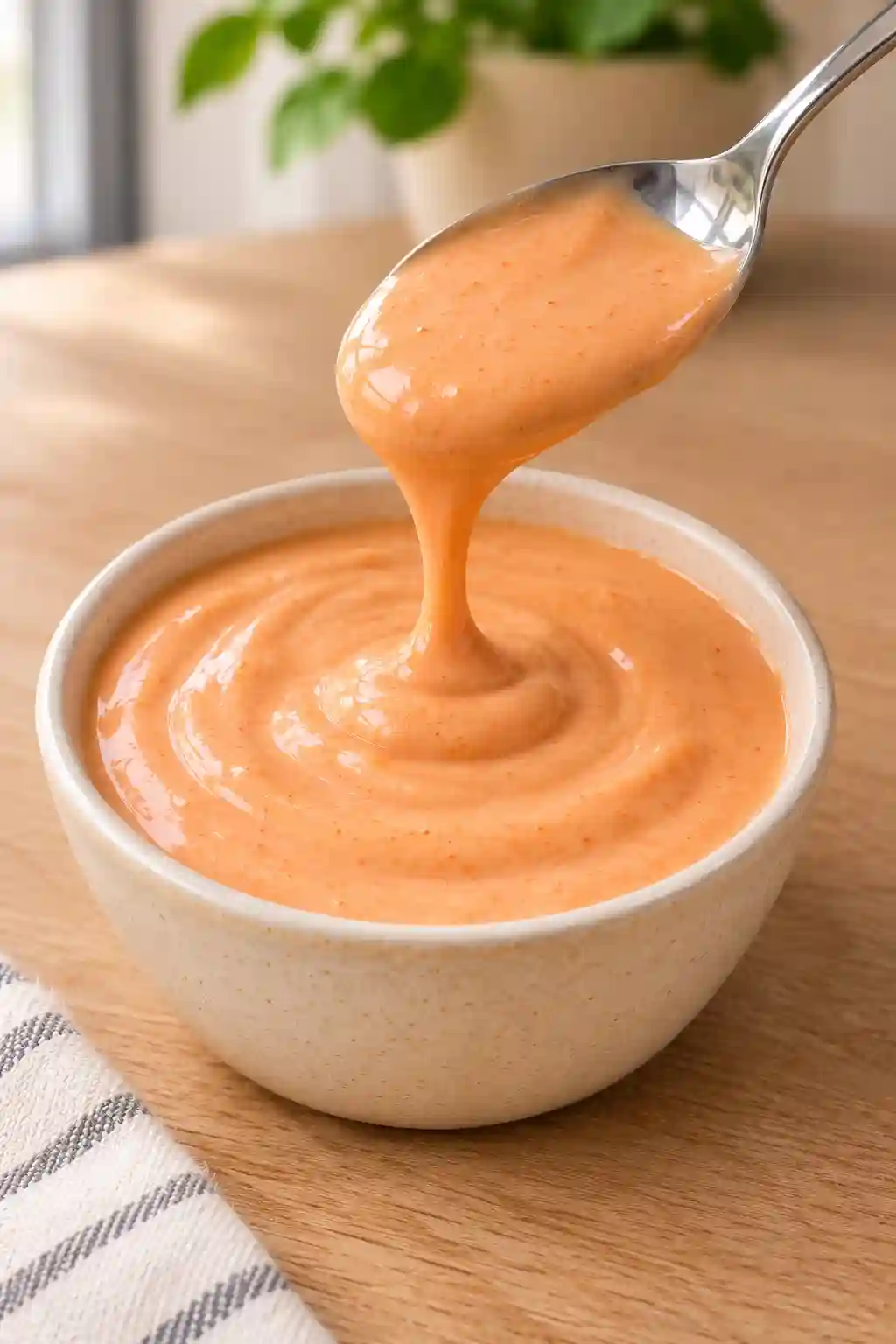
Yum yum sauce should be smooth, creamy, and thick enough for dipping while still being easy to drizzle. The amount of water determines how pourable it becomes. Start with the recipe’s 1 tablespoon of water, then adjust gradually to suit how you plan to serve it.
How to Fix Yum Yum Sauce That Is Too Thick
Add water 1 teaspoon at a time, whisking thoroughly after each addition. This gradually loosens the mayonnaise base without significantly changing the flavor.
For dipping, keep the sauce thick enough to cling to shrimp, chicken, or vegetables. For drizzling over fried rice or grilled meats, continue adding small amounts of water until it pours easily from a spoon.
How to Fix Yum Yum Sauce That Is Too Thin
If your yum yum sauce is too thin, stop adding water and whisk in a small amount of mayonnaise. Start with 1 tablespoon, mix until smooth, and reassess the consistency before adding more.
Keep in mind that adding mayonnaise also changes the balance of sweetness, acidity, and seasonings. Taste the sauce again after adjusting.
How to Balance Sweetness and Tanginess
If the sauce tastes too sweet, add a little rice vinegar. If it tastes too tangy, add a small amount of sugar. Make each adjustment gradually and whisk thoroughly before tasting again.
Since ketchup already contains sugar and vinegar, the balance can vary depending on the brand you use. Avoid making several adjustments at once, as this makes it harder to identify what the sauce needs.
Why Doesn’t My Yum Yum Sauce Taste Like Hibachi Sauce?
Hibachi-style yum yum sauce varies between restaurants, so homemade versions may not taste exactly the same. Differences in mayonnaise, ketchup, seasonings, and ingredient proportions can affect its sweetness, acidity, color, and overall flavor.
For this recipe, begin with the specified ingredient amounts rather than adding extra seasonings immediately. Refrigerate the sauce for at least 1 hour as directed, then taste it again before making small adjustments.
If the sauce tastes too strongly of tomato or looks redder than expected, check the amounts of ketchup and paprika before adding more seasonings. For an overly strong flavor, try whisking in 1 tablespoon of mayonnaise, then taste again; this may soften the seasoning but will also change the overall balance. If the sauce needs more acidity or sweetness, adjust the rice vinegar or sugar gradually.
Yum Yum Sauce Variations and Substitutions
You can adjust this homemade yum yum sauce to add heat, introduce a nutty flavor, or explore alternative ingredients. The original recipe uses regular mayonnaise, ketchup, and paprika without butter. For the most consistent results, start with the listed ingredients and quantities.
Spicy Yum Yum Sauce with Sriracha
For a spicy variation, whisk ½ teaspoon of Sriracha into the prepared sauce. Increase to 1 teaspoon if you prefer more heat.
Since Sriracha also adds acidity and garlic flavor, taste the sauce before making additional adjustments.
Yum Yum Sauce with Toasted Sesame Oil
Add ¼ teaspoon of toasted sesame oil to the prepared sauce and whisk until fully incorporated.
This optional ingredient introduces a subtle nutty, toasted flavor without requiring changes to the original ingredient quantities.
Ingredient Substitutions and Alternatives
Some ingredients can be changed, but substitutions may affect the sauce’s sweetness, acidity, and consistency.
| Ingredient | Alternative | Amount or Ratio | What to Expect |
|---|---|---|---|
| Regular mayonnaise | Kewpie mayonnaise | Start with 1 cup, checking the product’s weight | May change the richness, acidity, and savory flavor. |
| Ketchup | Tomato paste | No verified 1:1 substitution | More concentrated tomato flavor; sweetness and acidity would need adjustment. |
| Regular paprika | Smoked paprika | No tested ratio available | Introduces a smoky flavor instead of the original mild paprika profile. |
| Butter-free recipe | Adding melted butter | Not required; no tested quantity | Changes the original formulation and may affect consistency. |
Note: These alternatives have not been tested against the original formulation. For the intended flavor and texture, use the ingredients and quantities listed in the main recipe.
Yum Yum Sauce vs. Spicy Mayo vs. Sriracha Mayo
Yum yum sauce is typically sweeter and tangier than spicy mayo, while Sriracha mayo is a specific type of spicy mayo made with Sriracha. All three commonly use mayonnaise as a base, but their seasonings and heat levels differ.
| Feature | Yum Yum Sauce | Spicy Mayo | Sriracha Mayo |
|---|---|---|---|
| Base | Mayonnaise | Mayonnaise | Mayonnaise |
| Key ingredients | Ketchup, rice vinegar, sugar, paprika, garlic | Chili sauce or other spicy seasonings | Sriracha |
| Flavor | Mildly sweet and tangy | Creamy and spicy | Spicy, garlicky, and tangy |
| Heat level | Mild; Sriracha optional | Varies by recipe | Varies with Sriracha amount |
| Common uses | Hibachi chicken, shrimp, fried rice | Sushi bowls, sandwiches, fries | Sushi rolls, rice bowls, seafood |
For a mild, sweet-and-tangy hibachi-style sauce, choose yum yum sauce. If you prefer more chili heat, spicy mayo or Sriracha mayo may be a better fit.
What to Serve with Yum Yum Sauce
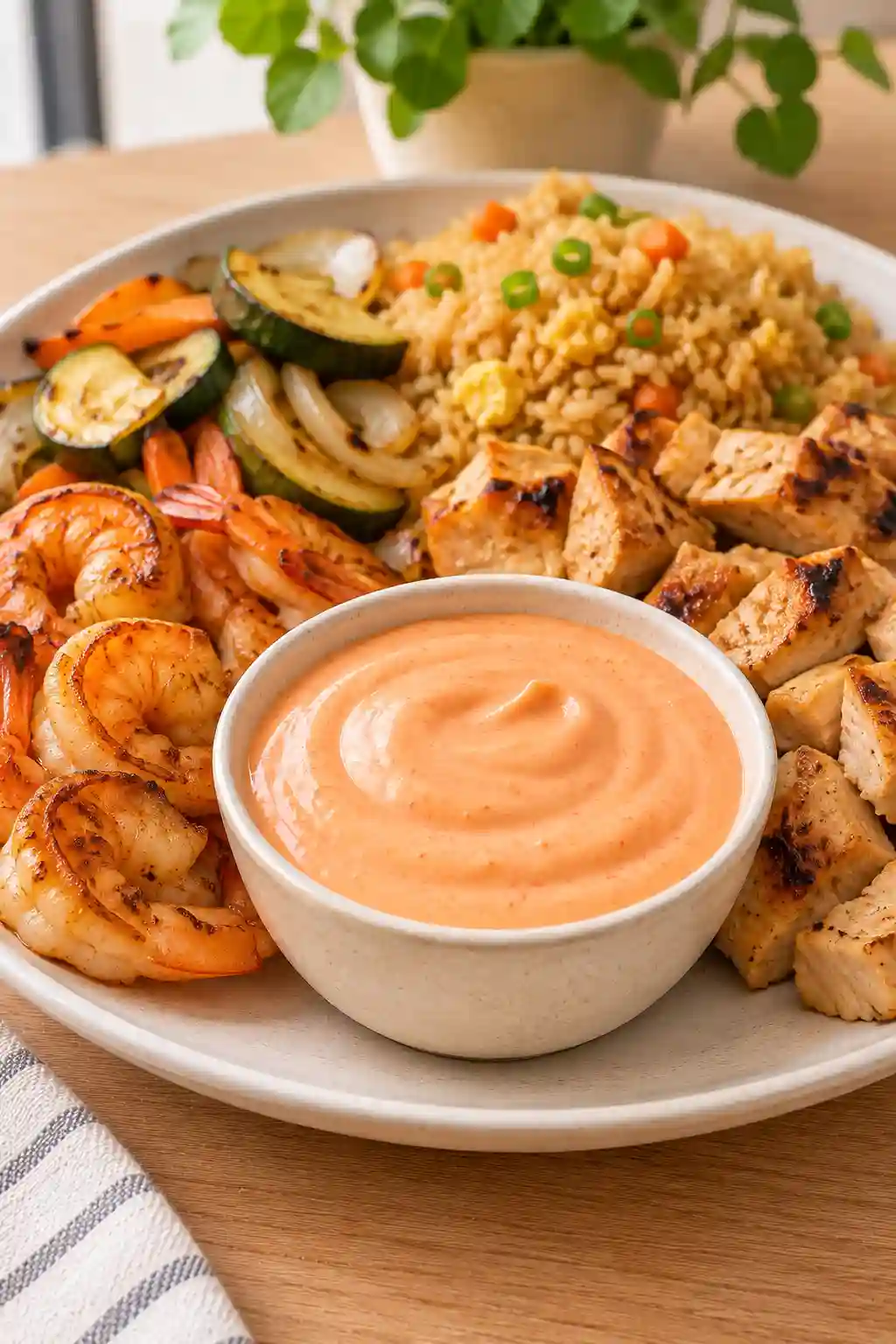
Yum yum sauce pairs well with grilled meats, seafood, rice, vegetables, and crispy sides. Its creamy texture, mild sweetness, and tangy flavor make it useful as both a dipping sauce and a drizzle for hibachi-style meals.
Hibachi Chicken, Steak, and Shrimp
Yum yum sauce is commonly served with proteins cooked on a Japanese-American steakhouse-style grill.
- Hibachi chicken: Spoon the sauce over grilled chicken or serve it on the side for dipping.
- Steak: Pair it with sliced grilled steak for a creamy contrast to the browned exterior.
- Shrimp: Use it as a dipping sauce for grilled or sautéed shrimp. Its mild sweetness complements the seafood without requiring additional heat.
Fried Rice, Noodles, and Grilled Vegetables
Yum yum sauce can also be used as a finishing sauce for rice, noodles, and vegetables.
- Fried rice: Drizzle a small amount over fried rice just before serving, rather than mixing it into the rice during cooking.
- Noodles: Add a little sauce to cooked hibachi-style noodles for extra creaminess.
- Grilled vegetables: Serve alongside zucchini, mushrooms, onions, or broccoli for dipping.
For these dishes, add water gradually if you prefer a thinner sauce that drizzles easily.
Fries, Burgers, and Seafood
Yum yum sauce isn’t limited to hibachi meals. It can also be served with familiar everyday dishes.
- French fries: Use the thicker version as a creamy dipping sauce.
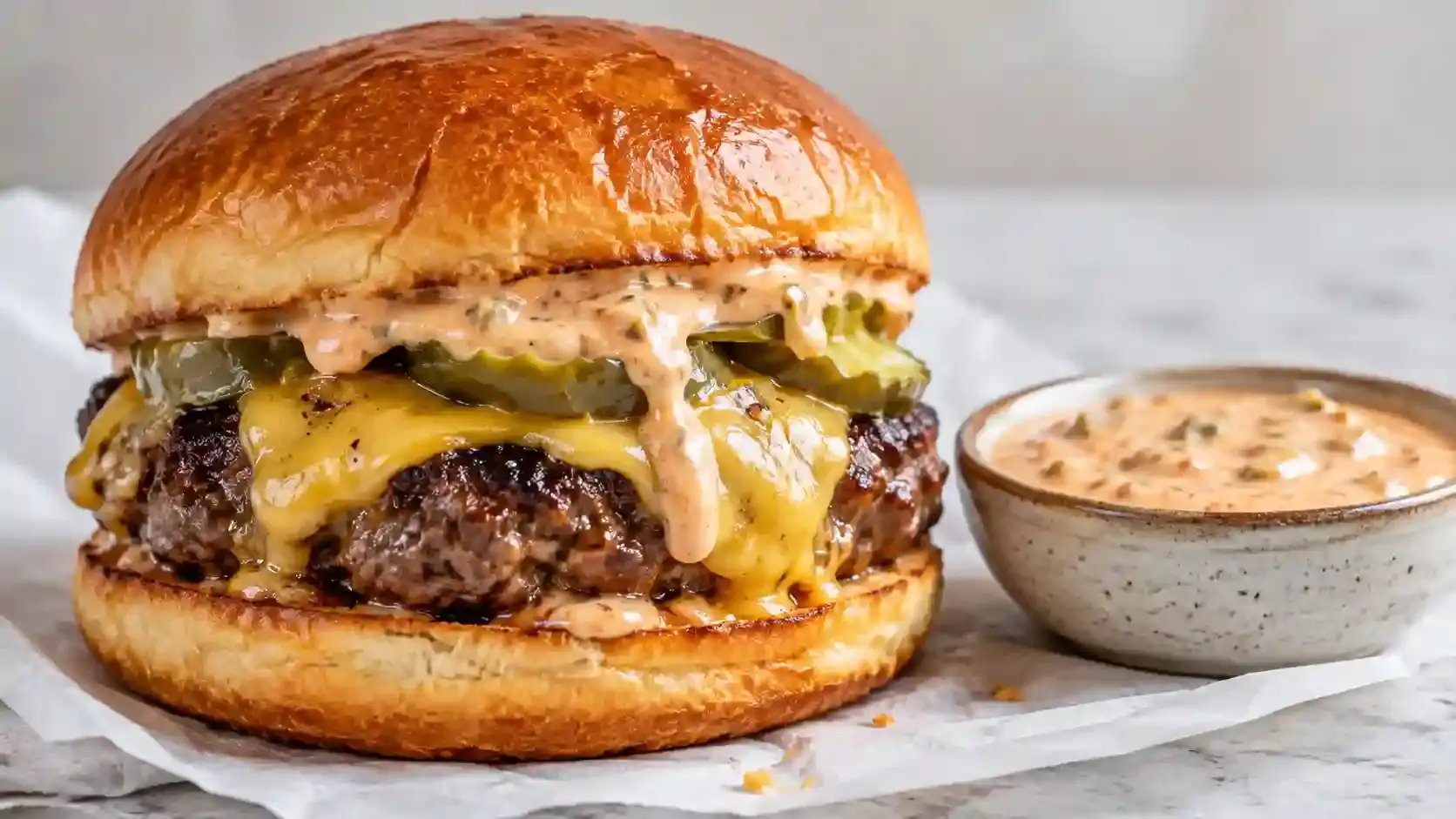
- Burgers: Spread a small amount on a burger bun as an alternative to standard condiments. For another option designed specifically for burgers, try this homemade burger sauce.
- Seafood: Serve with crab cakes, grilled fish, or other cooked seafood as a mildly sweet, tangy accompaniment.
If you enjoy preparing different homemade condiments, explore our sauce recipes collection for more ideas to serve with everyday meals.
How to Store Yum Yum Sauce
Store homemade yum yum sauce in a clean, airtight container in the refrigerator at 40°F (4°C) or below. Keep it chilled until serving, use a clean spoon each time, and return any unused sauce to the refrigerator promptly.
According to the FDA’s food storage guidelines, perishable foods should not remain at room temperature for more than two hours, or one hour when temperatures exceed 90°F (32°C).
How Long Does Homemade Yum Yum Sauce Last?
For a cautious make-ahead approach, use homemade yum yum sauce within 3–4 days when prepared with commercial mayonnaise and kept properly refrigerated.
This is a conservative recommendation based on general USDA leftover-storage guidance, not a laboratory-verified shelf life for this particular sauce. The exact storage period can depend on the ingredients, handling, and refrigeration conditions.
The USDA’s leftover storage guidance recommends 3–4 days for refrigerated leftovers.
Can You Freeze Yum Yum Sauce?
Freezing yum yum sauce is not recommended if you want to preserve its creamy texture. Mayonnaise-based emulsions can separate during freezing and thawing, leaving the sauce watery, grainy, or unevenly mixed.
The USDA’s freezing guidance identifies mayonnaise and cream-based sauces as foods that generally do not freeze well.
For a smooth dipping sauce, refrigeration is the better option.
Can You Make Yum Yum Sauce Ahead of Time?
Yes, yum yum sauce can be prepared ahead of serving. The recipe calls for at least 1 hour of refrigeration, and you can make it several hours ahead or the night before.
Keep the sauce covered and refrigerated. Before serving, give it a quick stir and check the consistency. If necessary, whisk in water 1 teaspoon at a time until it reaches your preferred thickness.
If you use homemade mayonnaise instead of commercial mayonnaise, follow the storage and food-safety guidance appropriate to that mayonnaise rather than assuming the same storage period applies.
PrintYum Yum Sauce Recipe
A creamy, mildly sweet and tangy homemade yum yum sauce made with mayonnaise, ketchup, rice vinegar, and seasonings. Serve as a hibachi-style dipping sauce or drizzle.
- Prep Time: 5
- Total Time: 65
- Yield: 10 servings 1x
- Category: Sauce
- Method: Whisking
- Cuisine: Japanese-American
Ingredients
- 1 cup (230 g) mayonnaise
- 2 tablespoons ketchup
- 2 teaspoons granulated sugar
- 1 tablespoon rice vinegar
- 1 teaspoon regular paprika
- 1 teaspoon garlic powder
- 1/4 teaspoon fine salt
- 1 tablespoon water, plus more as needed
- Optional: 1/2 to 1 teaspoon Sriracha
- Optional: 1/4 teaspoon toasted sesame oil
Instructions
- Add the mayonnaise, ketchup, sugar, rice vinegar, paprika, garlic powder, and salt to a medium mixing bowl.
- Whisk for 30 to 60 seconds, until smooth and the sugar is well incorporated.
- Whisk in 1 tablespoon of water. Add more water 1 teaspoon at a time if a thinner consistency is desired.
- Taste and adjust with a little more rice vinegar for tanginess, sugar for sweetness, or Sriracha for heat.
- Cover and refrigerate for at least 1 hour before serving. You can also prepare the sauce several hours ahead or refrigerate it overnight.
Notes
- For a spicy variation, add 1/2 to 1 teaspoon Sriracha.
- For a subtle nutty flavor, add 1/4 teaspoon toasted sesame oil.
- Adjust the consistency by adding water 1 teaspoon at a time.
- Keep refrigerated in a clean, airtight container.
- Use within 3 to 4 days as a conservative storage recommendation when made with commercial mayonnaise and kept properly refrigerated.
- Prep time and yield are estimates and should be confirmed by preparing and measuring the finished recipe.
- Nutrition values are estimates per serving based on 10 servings of approximately 2 tablespoons each. Optional ingredients are excluded. Actual values vary with ingredient brands and portion sizes.
Nutrition
- Serving Size: 2 tablespoons (30 ml)
- Calories: 165
- Sugar: 2.1 g
- Sodium: 240 mg
- Fat: 17.3 g
- Saturated Fat: 2.7 g
- Carbohydrates: 2.5 g
- Fiber: 0.1 g
- Protein: 0.3 g
- Cholesterol: 10 mg
Yum Yum Sauce Recipe FAQs
Have questions about substitutions, ingredients, or nutrition? Here are quick answers to common questions about homemade yum yum sauce.
What Is the Closest Thing to Yum Yum Sauce?
A mayonnaise-and-ketchup mixture is a simple alternative. Thousand Island dressing offers a similar creamy, tangy profile, although neither exactly matches yum yum sauce.
How Unhealthy Is Yum Yum Sauce?
Yum yum sauce is mayonnaise-based, making it relatively high in fat and calories. Its nutritional impact depends on the ingredients and portion size, so moderation is useful.
Can I Make Yum Yum Sauce Without Rice Vinegar?
Yes. Apple cider vinegar or white wine vinegar can be used as alternatives. Start with a smaller amount and adjust to taste, as these substitutions are untested in this recipe.
Can I Make Yum Yum Sauce Without Paprika?
Yes. You can omit paprika, but the sauce may have a lighter color and less pepper flavor. The remaining ingredients will still provide a creamy, sweet, and tangy sauce.
Final Thoughts on This Yum Yum Sauce Recipe
This homemade yum yum sauce recipe combines simple ingredients for a creamy, mildly sweet, and tangy hibachi-style sauce. Adjust the consistency with water, refrigerate for at least one hour, and serve it with shrimp, chicken, fried rice, or vegetables. For a different flavor, add a little Sriracha or toasted sesame oil.