


The Japanese pink salt weight loss drink is a simple mix of warm water and pink salt, often combined with ingredients such as lemon, apple cider vinegar, ginger, honey, or matcha. Despite the viral weight-loss claims around it, there is no strong evidence that pink salt itself directly burns body fat or produces meaningful weight loss. Its most straightforward role is providing water and sodium, an electrolyte involved in normal fluid balance.
The name Japanese pink salt can also be misleading. Many viral recipes use Himalayan pink salt even when they are described as Japanese pink salt drinks, so the term does not always refer to a specific salt produced in Japan. Drinking salted water may temporarily affect hydration and water balance, but changes in water weight are not the same as losing body fat. Sustainable fat loss depends on broader eating patterns and energy balance, not on pink salt alone.
Quick answer: Does Japanese Pink Salt Help With Weight Loss?
- Pink salt does not directly burn body fat.
- The drink provides water and sodium.
- Sodium can temporarily affect water balance.
- Too much sodium is not appropriate for everyone.
What Is the Japanese Pink Salt Weight Loss Drink?
The Japanese pink salt weight loss drink is a simple mixture of warm water and a small amount of pink salt, often customized with lemon, apple cider vinegar, ginger, honey, or matcha. It has become popular online as a pink salt trick, but the drink is better understood as a salted or flavored hydration drink rather than a proven weight-loss method.
What Does Japanese Pink Salt Actually Mean?
Japanese pink salt is not always the name of a clearly defined type of salt. In many viral recipes, the term is used loosely even when the ingredient shown is Himalayan pink salt. Unless a product’s origin is clearly identified on the label, it is safer not to assume that the salt was produced or harvested in Japan.
Is Japanese Pink Salt the Same as Himalayan Pink Salt?
No, not necessarily. Himalayan pink salt is a specific type of rock salt commonly associated with deposits in the Himalayan region, while Japanese pink salt may refer to a branded product, a different specialty salt, or simply the name used for the viral drink trend.
For this recipe, Himalayan pink salt can be used when a specifically identified Japanese pink salt product is not available. The important point is to check the actual product label rather than relying on the name of the trend.
What Is Sole Water?
Sole water is usually a highly concentrated salt-water mixture made by dissolving a larger amount of salt in water until the solution becomes saturated. That is different from this recipe, which uses only a measured small amount of pink salt in 8–10 ounces of water.
Because the two preparations use very different salt concentrations, they should not be treated as interchangeable.
Japanese Pink Salt Drink Recipe
This recipe uses a small amount of pink salt in warm water, with optional ingredients for flavor. Adding more salt does not make the drink more effective for weight loss.
Ingredients
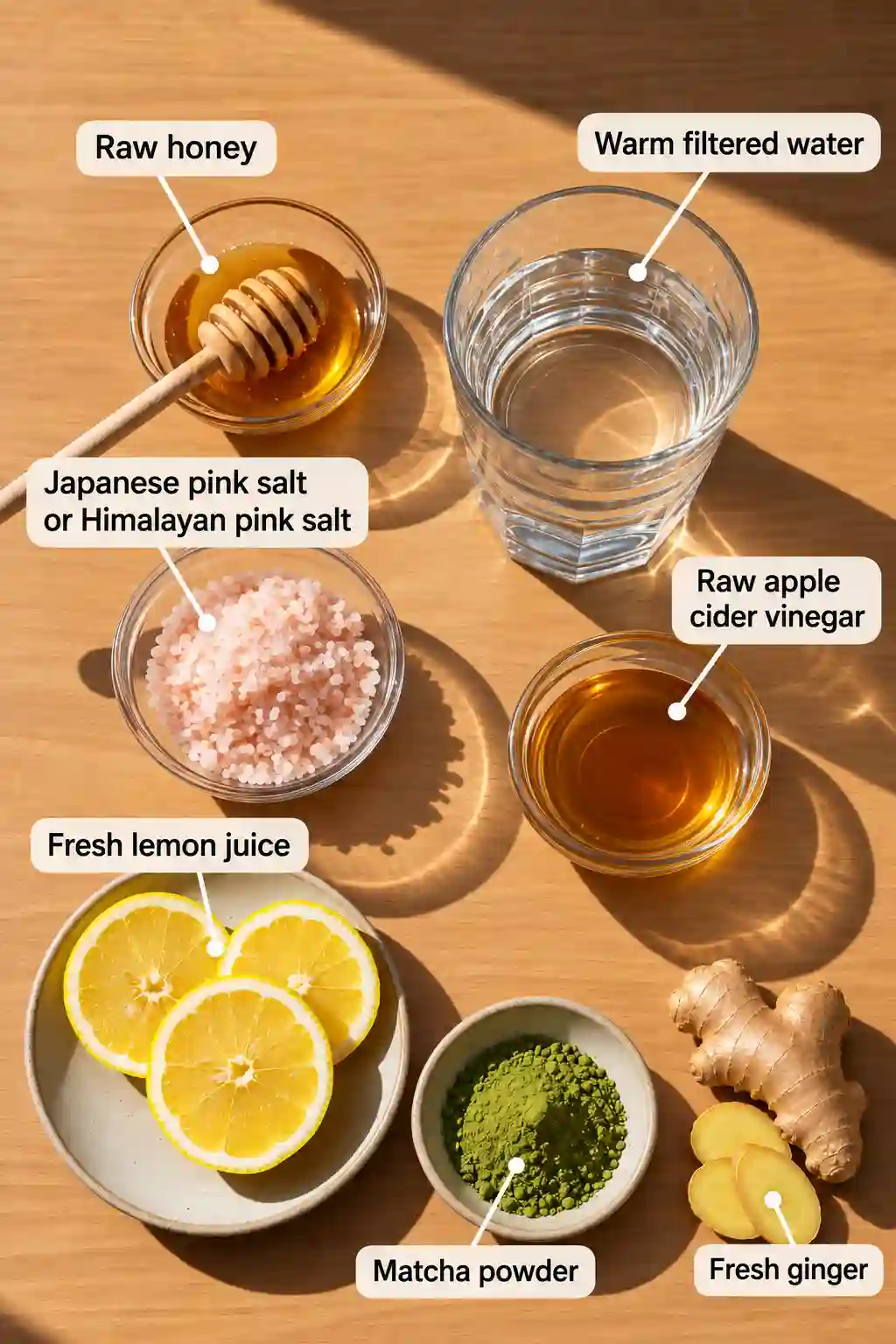
| Ingredient | Amount | Notes |
|---|---|---|
| Japanese pink salt or Himalayan pink salt | 1/4 teaspoon | Use a level measuring spoon |
| Warm filtered water | 8–10 ounces | Warm, not boiling |
| Fresh lemon juice | Juice from 1/2 lemon | Optional |
| Raw apple cider vinegar | 1/4–1/2 teaspoon | Optional |
| Raw honey | 1 teaspoon | Optional |
| Matcha powder | 1/4 teaspoon | Optional |
| Fresh ginger | 1–2 slices | Optional |
Instructions

- Warm 8–10 ounces of filtered water until hot but not boiling.
- Pour the water into a heat-safe mug or glass.
- Add 1/4 teaspoon of pink salt and stir until dissolved.
- Add any optional lemon juice, apple cider vinegar, honey, matcha, or ginger.
- Taste the drink and add more water if it seems too salty or concentrated.
- Drink it as a lightly salted or flavored beverage.
How Much Pink Salt Should You Use?
Use 1/4 teaspoon of pink salt in 8–10 ounces of water for this recipe. More salt is not better because increasing the amount also increases sodium intake.
If you are using coarse crystals rather than finely ground salt, the amount that fits into a teaspoon can vary slightly depending on crystal size. Using a level measuring spoon helps keep the recipe consistent.
Does Japanese Pink Salt Actually Help With Weight Loss?
No strong evidence shows that Japanese or Himalayan pink salt directly causes meaningful fat loss. Pink salt mainly provides sodium, while the water provides hydration. If this drink replaces a higher-calorie beverage, it could indirectly reduce calorie intake, but the salt itself is not a weight-loss ingredient.
Hydration
Hydration means maintaining enough fluid for normal body functions. Sodium is an electrolyte involved in fluid balance, nerve function, and muscle function. However, adding salt to water is not necessary for everyone, and plain water is often enough for everyday hydration.
Water Weight
Water weight is not the same as body fat. Sodium affects how the body manages fluid, and a higher sodium intake can temporarily increase water retention. That can change the number on the scale without representing a change in body fat.
Body-Fat Loss
Pink salt does not directly burn body fat. Long-term weight loss depends on broader eating and activity patterns that create and maintain an energy deficit over time. Replacing a calorie-containing drink with a lower-calorie option may help within that bigger picture, but pink salt itself is not the cause.
Pink Salt Weight-Loss Claims vs Evidence
Many claims around the Japanese pink salt weight loss trend go beyond what the evidence supports. Pink salt provides sodium and may contain small amounts of other minerals, but it has not been shown to directly burn fat or significantly increase metabolism.
| Claim | What the Evidence Suggests | Practical Verdict |
|---|---|---|
| Burns body fat | There is no strong evidence that pink salt directly increases fat burning. Weight loss depends on broader calorie intake, eating patterns, and activity over time. | Not supported |
| Boosts metabolism | Sodium is needed for normal body functions, but pink salt is not a proven metabolic booster. | Not supported |
| Reduces bloating | Sodium affects fluid balance and can increase water retention in some situations, so this claim is not reliable as a general benefit. | Context-dependent |
| Improves hydration | Water supports hydration, and sodium is an electrolyte involved in fluid balance. However, most people do not need salted water for routine hydration. | Plausible in specific situations |
| Provides minerals | Pink salt can contain trace minerals, but amounts vary by product and are generally small compared with the amount of sodium. | True but often overstated |
| Supports weight loss | If the drink replaces a higher-calorie beverage, it may indirectly reduce calorie intake. Pink salt itself is not the reason for fat loss. | Indirect only |
The practical takeaway is simple: pink salt can be used as a culinary ingredient or in a lightly salted drink, but it should not be treated as a fat-burning or metabolism-boosting supplement.
Japanese Pink Salt vs Himalayan Pink Salt vs Table Salt
Japanese pink salt, Himalayan pink salt, and table salt are all primarily sources of sodium chloride, but they are not necessarily the same product. The biggest practical differences usually involve origin, processing, iodine fortification, crystal size, and how the salt is marketed or used.
The term Japanese pink salt is especially important to treat carefully because it does not always identify one standardized salt. If the product label does not clearly state its origin and composition, those details should not be assumed.
| Feature | Japanese Pink Salt | Himalayan Pink Salt | Table Salt |
|---|---|---|---|
| Common origin | Depends on the specific product; the viral term does not always identify a standardized Japanese salt | Commonly sourced from rock-salt deposits in Pakistan | Varies by manufacturer and source |
| Main component | Primarily sodium chloride if it is a culinary salt | Primarily sodium chloride | Primarily sodium chloride |
| Iodine | Depends on the product; check the label | Usually not iodized unless specifically labeled | Often available in iodized versions |
| Trace minerals | Depends on the actual salt product | Contains trace minerals, generally in small amounts | Typically more refined, with fewer naturally occurring trace minerals |
| Grain size | Product-dependent | Available in fine and coarse forms | Usually fine |
| Typical use | Culinary use or viral pink salt drink recipes | Cooking, seasoning, and drinks | Everyday cooking and seasoning |
| Proven weight-loss benefit | None established | None established | None established |
Why Iodine Matters
One meaningful difference can be iodine. Many table salts are fortified with iodine, while Himalayan pink salt and specialty salts may not be. Iodine is an essential nutrient, so replacing iodized salt with a non-iodized specialty salt does not automatically make the diet healthier.
For this recipe, the main point is not which salt sounds more exotic, but what the product actually contains and how much sodium you are adding.
Variations and Substitutions
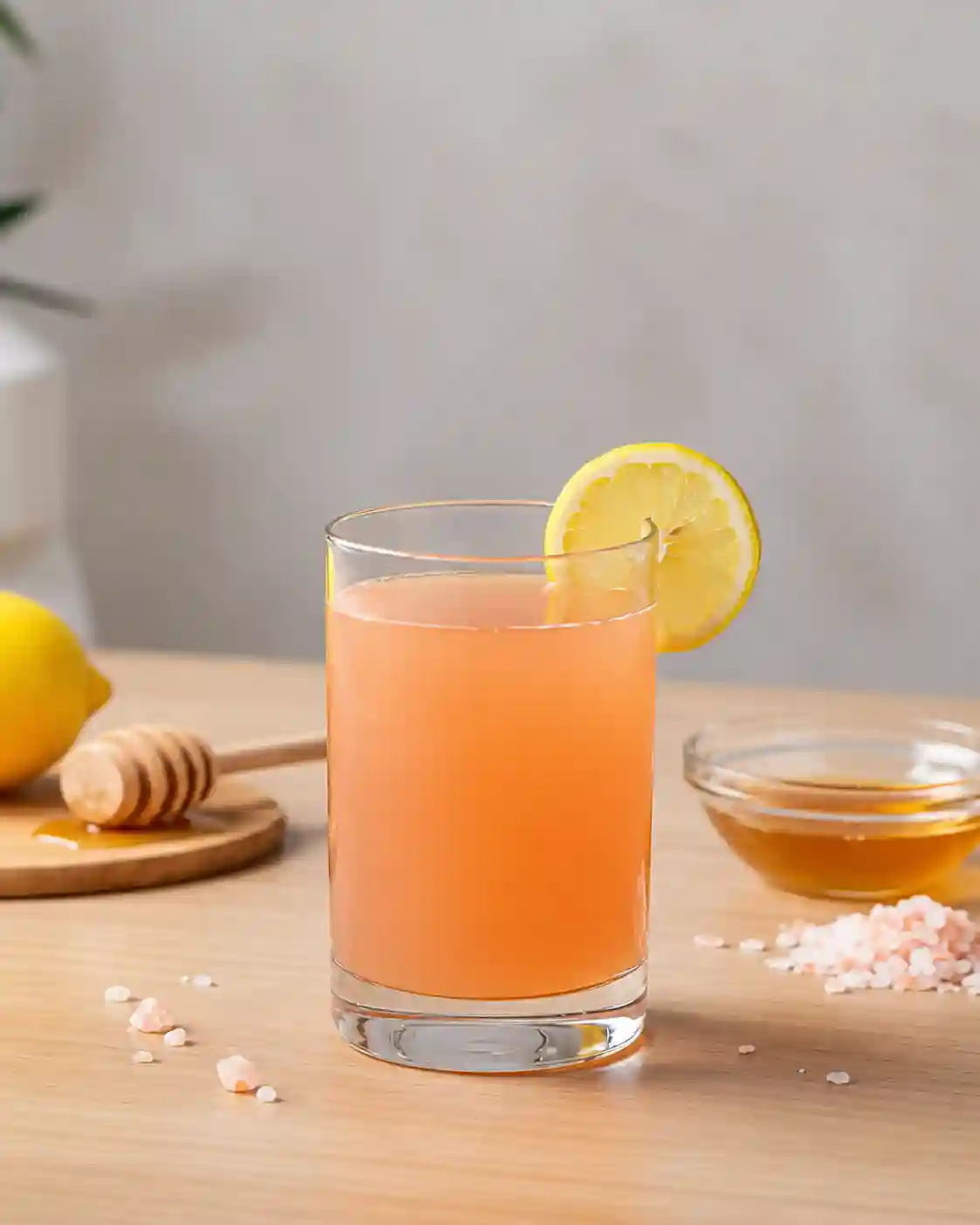
These variations change the flavor and composition of the drink, but none should be treated as a fat-burning upgrade. Keep the salt amount the same unless you are making a no-added-salt version.
| Variation | Amount | How It Changes the Drink |
|---|---|---|
| Lemon pink salt water | Juice from 1/2 fresh lemon | Adds acidity and a brighter flavor, plus a small amount of calories. |
| Ginger pink salt water | 1–2 fresh ginger slices | Adds a warmer, sharper flavor without meaningful added sodium. |
| Apple cider vinegar | 1/4–1/2 teaspoon | Makes the drink more acidic and tangy. More is not necessarily better. |
| Honey | 1 teaspoon | Adds sweetness, sugar, and calories. |
| Matcha | 1/4 teaspoon | Adds an earthy flavor and some caffeine. |
| No-added-salt version | 8–10 oz warm water with optional lemon or ginger | Removes the added sodium while keeping the drink simple and flavored. |
This keeps the section practical and easy to scan without implying that any variation improves fat loss.
When Does a Salt Drink Actually Make Sense?
A lightly salted drink can make more sense in situations where the body has lost both water and sodium, such as after prolonged sweating, exercise, or time spent in hot conditions. Even then, the amount of salt should stay modest, and the drink should not be treated as a weight-loss tool.
For everyday hydration, plain water is usually sufficient. Adding pink salt is not necessary simply because a drink is marketed as an electrolyte or wellness drink.
If you want a broader explanation of how pink salt fits into weight-loss claims, see our guide to pink salt and weight loss.
The main takeaway is that salted water can have a practical hydration role in specific situations, but it is not something everyone needs to drink every day.
Is Pink Salt Water Safe?
Pink salt water adds sodium to your daily intake, so it should be treated like any other source of salt rather than as a harmless wellness hack.
The FDA notes that higher sodium intake is associated with increased blood pressure. For most adults, the recommended limit is less than 2,300 mg of sodium per day.
High Blood Pressure
If you have high blood pressure, regularly adding salt to water may not be appropriate. Higher sodium intake can increase fluid retention and blood pressure.
Kidney Disease
People with chronic kidney disease may need individualized sodium limits. NIDDK recommends working with a healthcare professional or dietitian to determine an appropriate amount.
Heart Disease and Sodium-Restricted Diets
If you have heart disease or follow a sodium-restricted diet, a daily salted-water routine may conflict with your recommended sodium limit.
Follow the guidance given by your healthcare professional rather than a viral drink routine.
Can You Drink Pink Salt Water Every Day?
There is no established need for most people to drink pink salt water every day.
If your diet already provides enough sodium, salted water simply adds more. Plain water is usually sufficient for routine hydration.
Iodine and Pink Salt
Pink salt is often not iodized. The NIH notes that specialty salts, including Himalayan salt, are usually not iodized unless the label says otherwise.
If iodized salt is an important source of iodine in your diet, check the label before replacing it with pink salt.
Safety note: This article is for general informational and culinary purposes and is not medical advice. If you have high blood pressure, kidney disease, heart disease, or follow a sodium-restricted diet, consult a qualified healthcare professional before regularly drinking salted water.
Cost, Storage and Practical Tips
The basic pink salt drink is inexpensive to make, especially when using only water and a small amount of salt. Adding lemon, honey, matcha, ginger, or apple cider vinegar will increase the cost depending on the brand and local grocery prices.
As a general estimate, a glass may cost well under $1, depending on which optional ingredients you use.
Storage
For best results, prepare the drink shortly before serving.
If you add fresh lemon, ginger, honey, matcha, or apple cider vinegar, store leftovers in a covered container in the refrigerator.
PrintJapanese Pink Salt Weight Loss Recipe

This pink salt drink combines warm water with a small amount of Japanese pink salt or Himalayan pink salt. Lemon, apple cider vinegar, honey, matcha, or ginger can be added for flavor. Pink salt itself is not a proven weight-loss ingredient.
- Prep Time: 2 minutes
- Total Time: 2 minutes
- Yield: 1 serving 1x
- Category: Drinks
- Method: No-Cook
Ingredients
- 1/4 teaspoon Japanese pink salt or Himalayan pink salt
- 8–10 ounces warm filtered water
- Juice from 1/2 fresh lemon, optional
- 1/4–1/2 teaspoon raw apple cider vinegar, optional
- 1 teaspoon raw honey, optional
- 1/4 teaspoon matcha powder, optional
- 1–2 fresh ginger slices, optional
Instructions
- Warm 8–10 ounces of filtered water until hot but not boiling.
- Pour the water into a heat-safe mug or glass.
- Add 1/4 teaspoon of pink salt and stir until dissolved.
- Add any optional lemon juice, apple cider vinegar, honey, matcha, or ginger.
- Taste and add more water if the drink seems too salty.
- Drink it as a lightly salted or flavored beverage.
Notes
- More salt is not better; adding more also increases sodium intake.
- If using coarse salt, use a level measuring spoon because crystal size can affect volume.
- Refrigerate leftovers in a covered container if fresh add-ins are used.
Nutrition
- Serving Size: 1 drink
Frequently Asked Questions
What is the 4 ingredient weight loss drink?
A common four-ingredient version combines warm water, pink salt, lemon juice, and apple cider vinegar. It is often called a weight-loss drink online, but there is no strong evidence that this combination directly causes fat loss.
Does pink salt water break a fast?
Plain water with salt contains little to no energy, but adding honey or other calorie-containing ingredients changes the drink. Whether it fits a fasting routine depends on the type of fast being followed.
Can you make pink salt water ahead of time?
Yes, the simple salt-and-water version can be prepared ahead, but it is usually easiest to mix shortly before drinking. If you add fresh lemon, ginger, honey, matcha, or apple cider vinegar, keep the drink refrigerated in a covered container.
What to Remember
Japanese pink salt water can be enjoyed as a simple flavored or lightly salted drink, but it is not a proven weight-loss method.
Pink salt does not directly burn body fat, and temporary changes in water weight are not the same as fat loss. If you choose to drink it, keep the salt amount modest and treat it as part of your overall diet rather than a shortcut for weight loss.
Updated for 2026: This article was revised to improve the recipe, clarify hydration vs. fat loss, strengthen sodium and safety guidance, and remove unsupported weight-loss claims.









I love Pink Salt for weight loss. Thank you!
So glad to hear that! Pink salt can be a great addition to a healthy routine when used mindfully.
I Support this
Thank you so much for your support! It means a lot.
What are the side effects of pink salt? Thank you!
Pink salt is great in moderation, it adds flavor and trace minerals, just remember a little goes a long way!