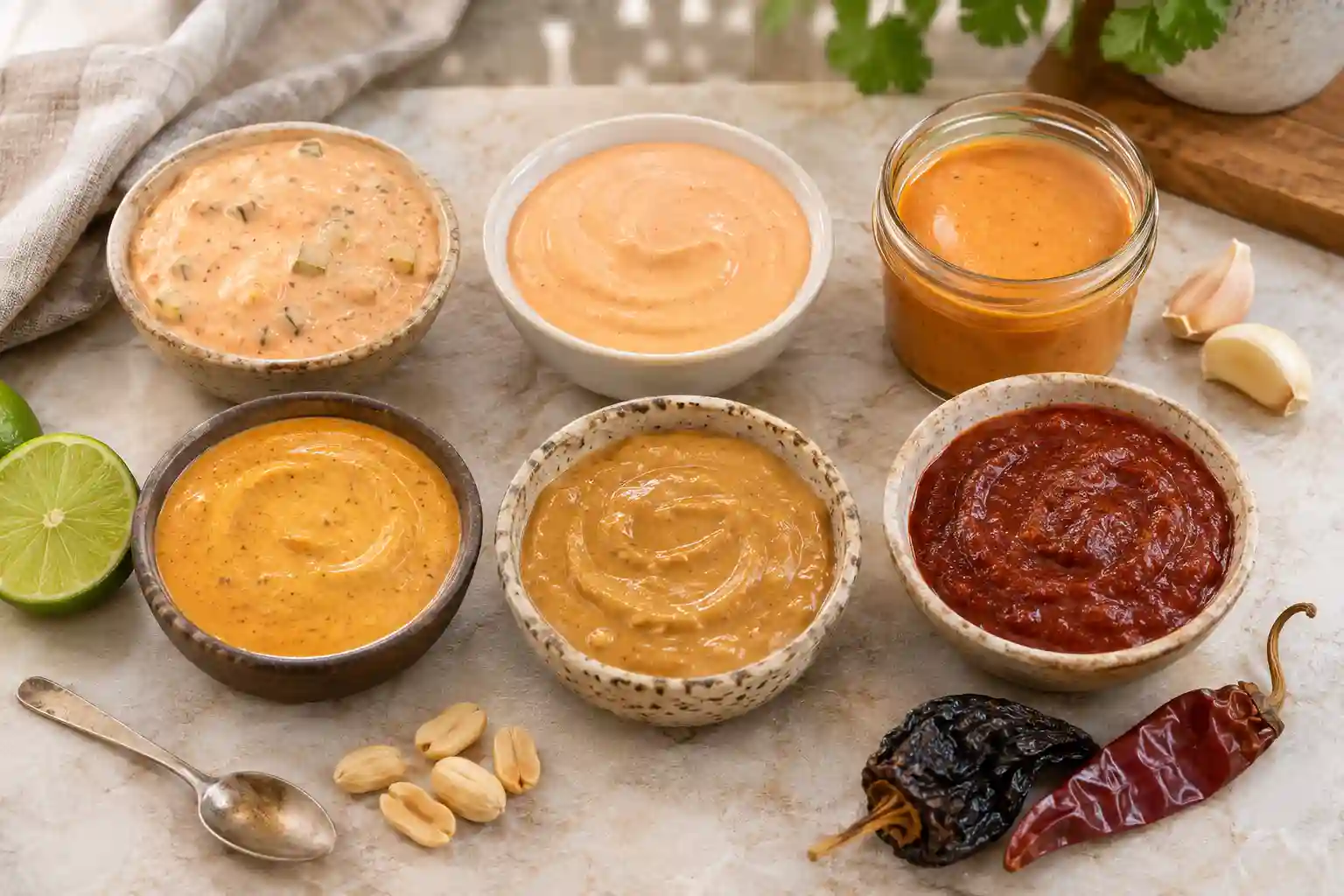

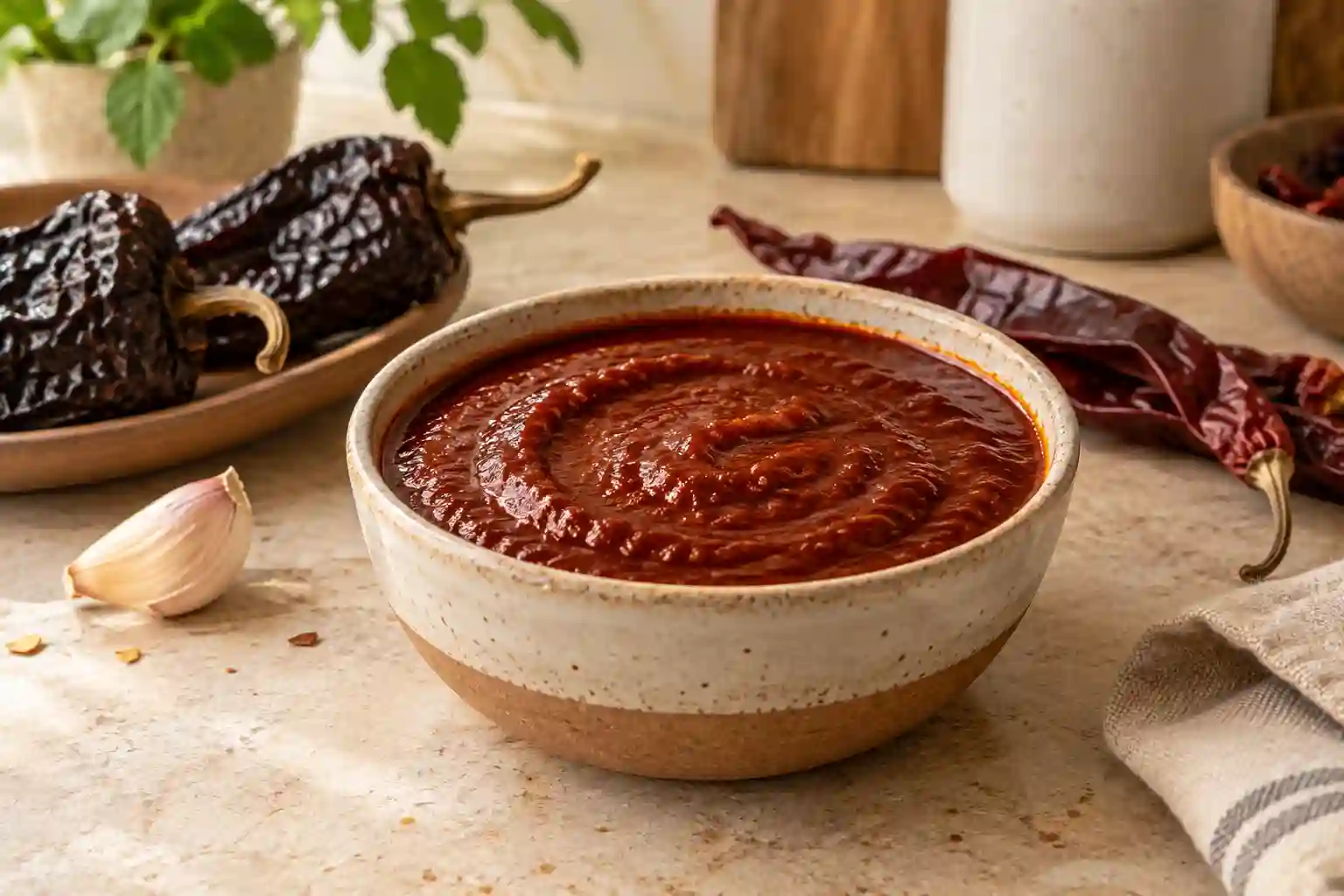
This adobo sauce recipe makes a rich Mexican-style sauce with dried ancho and guajillo chiles, garlic, onion, vinegar, and warm spices. The dried chiles are lightly toasted, rehydrated until soft, then blended with cooked aromatics, broth, and apple cider vinegar for a smooth, deeply flavored sauce.
You can adjust the final consistency with a little more liquid and season it with salt and optional sugar to taste. Use this homemade adobo sauce as a marinade, a cooking sauce, or to add chile flavor to tacos, enchiladas, meats, beans, and other savory dishes.
Key Takeaways
- This is a Mexican-style adobo sauce made with ancho and guajillo chiles.
- The chiles are toasted, soaked, and blended with aromatics, vinegar, broth, and spices.
- The sauce can be made thicker or thinner by adjusting the liquid.
- It works well as a marinade, cooking sauce, or flavorful base for savory dishes.
What Is Adobo Sauce?
Adobo sauce is a chile-based sauce used in Mexican cooking, typically built from dried chiles, spices, and vinegar. In this recipe, ancho and guajillo chiles form the base, while onion, garlic, apple cider vinegar, cumin, oregano, and cinnamon add savory, tangy, and aromatic layers.
The word adobo can refer to different preparations depending on the cuisine. This recipe specifically makes a Mexican-style adobo sauce, not Filipino adobo or dry adobo seasoning.
Mexican Adobo vs. Other Types of Adobo
Mexican adobo sauce is not the same thing as Filipino adobo. Mexican versions commonly center on chiles and a seasoned sauce, while Filipino adobo refers to a different cooking tradition and dish style.
Traditional Mexican chile sauces can also be used in ways similar to an adobo sauce or marinade.
It is also different from dry adobo seasoning, which is a spice blend rather than a prepared sauce. For this recipe, “adobo sauce” means the blended Mexican-style chile sauce described above.
Ingredients for Adobo Sauce Recipe
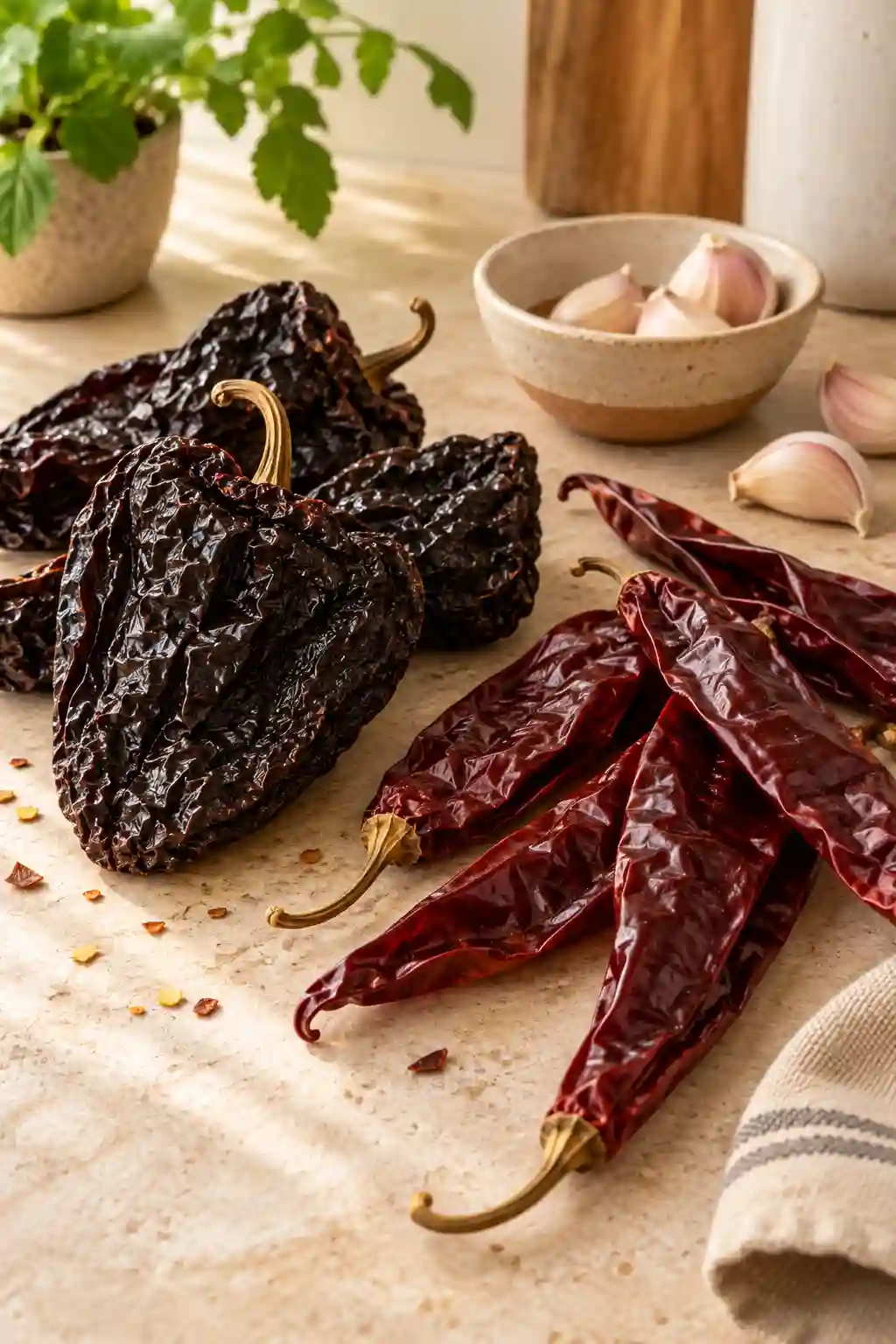
This adobo sauce is built around dried ancho and guajillo chiles, then layered with onion, garlic, vinegar, broth, tomato paste, and warm spices. Each ingredient plays a different role, while the dried chiles remain the base of the sauce.
| Ingredient | Amount | Role in the Recipe |
|---|---|---|
| Guajillo peppers | 4 | Forms part of the dried chile base |
| Ancho peppers | 4 | Adds depth to the chile base |
| Hot water | 3 cups, or enough to cover | Rehydrates the dried chiles |
| Olive oil | 1 tablespoon | Used to cook the onion and garlic |
| Onion | ½ small onion, chopped | Adds a savory aromatic base |
| Garlic | 4 cloves, chopped | Adds aromatic flavor |
| Tomato paste | 2 tablespoons, optional | Helps round out the chile mixture |
| Mexican cinnamon | ½ teaspoon | Adds warm spice |
| Cumin | ½ teaspoon | Adds earthy seasoning |
| Mexican oregano | ½ teaspoon | Adds herbal seasoning |
| Sugar | ½ teaspoon, optional | Can be adjusted to taste for balance |
| Salt | To taste | Seasons the finished sauce |
| Chicken broth | ½ cup | Loosens the sauce before blending; use up to 1 cup for a thinner consistency |
| Apple cider vinegar | 3 tablespoons | Adds acidity |
Ancho and Guajillo Chiles
The recipe uses 4 guajillo peppers and 4 ancho peppers. Remove the stems and seeds before toasting and soaking them.
Using both dried chiles creates the base of this Mexican-style adobo sauce. Keeping this explanation close to the ingredient table also helps answer the search intent behind what is in adobo sauce without turning the section into a long ingredient essay.
Optional Ingredients
The tomato paste and sugar are optional in this recipe. Tomato paste can make the sauce milder and rounder, while sugar can be adjusted only if needed after tasting the finished sauce.
The amount of broth can also be increased from ½ cup to 1 cup when a thinner consistency is preferred.
How to Make This Adobo Sauce Recipe
Making adobo sauce starts with dried chiles, followed by a short cooking step for the aromatics and spices, then blending everything into a smooth sauce. The key is to soften the chiles fully before blending and add the final liquid gradually so you can control the consistency.
1. Prepare and Toast the Dried Chiles
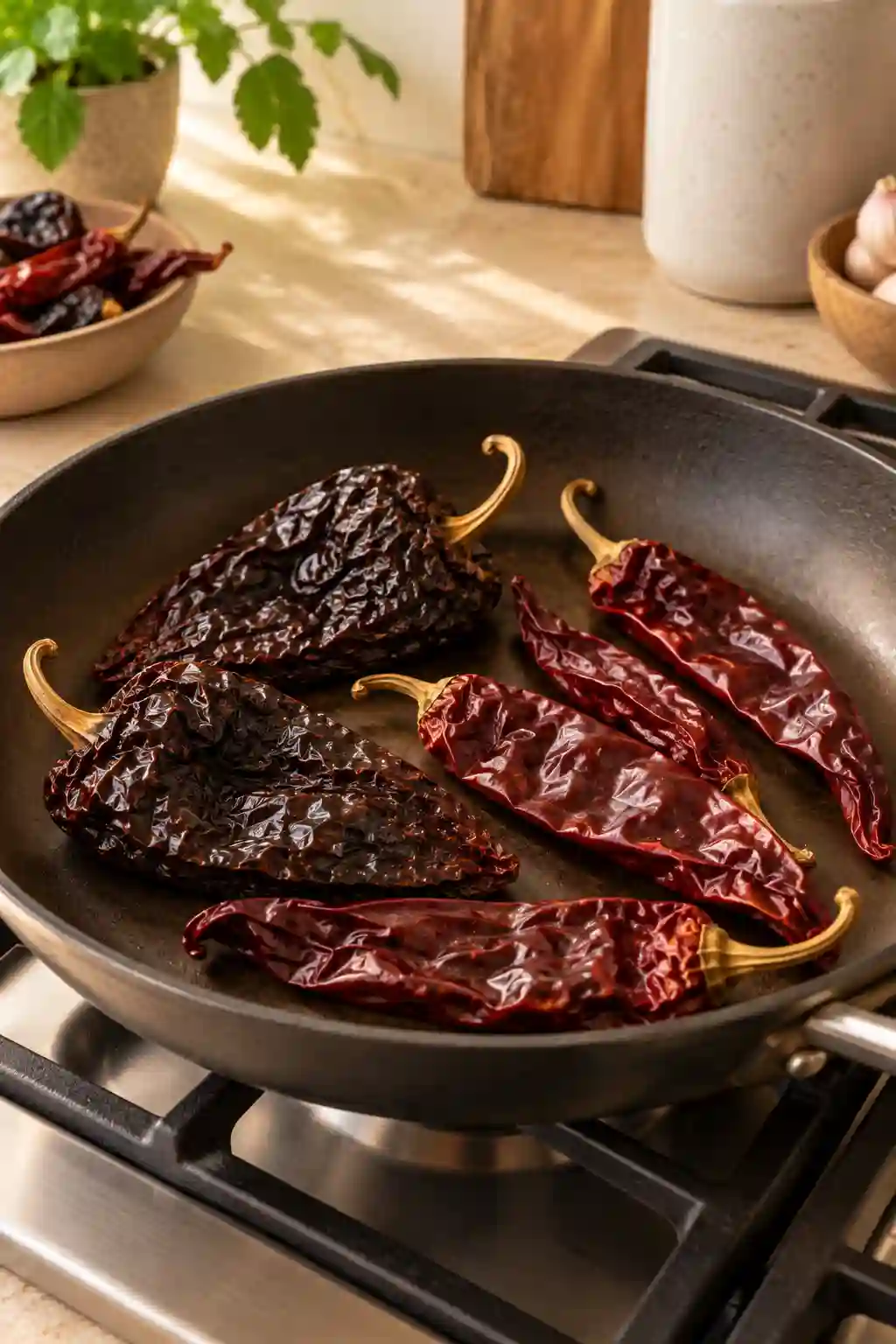
Remove the stems from the 4 guajillo peppers and 4 ancho peppers, then remove the seeds. Cutting the peppers open makes this easier.
Heat a large pan over medium-high heat. Add the dried chiles and dry-toast them for a couple of minutes per side, until they become more pliable and begin to puff slightly.
Avoid letting the chiles burn, since excessive toasting can affect the flavor of the finished sauce.
2. Soak the Chiles
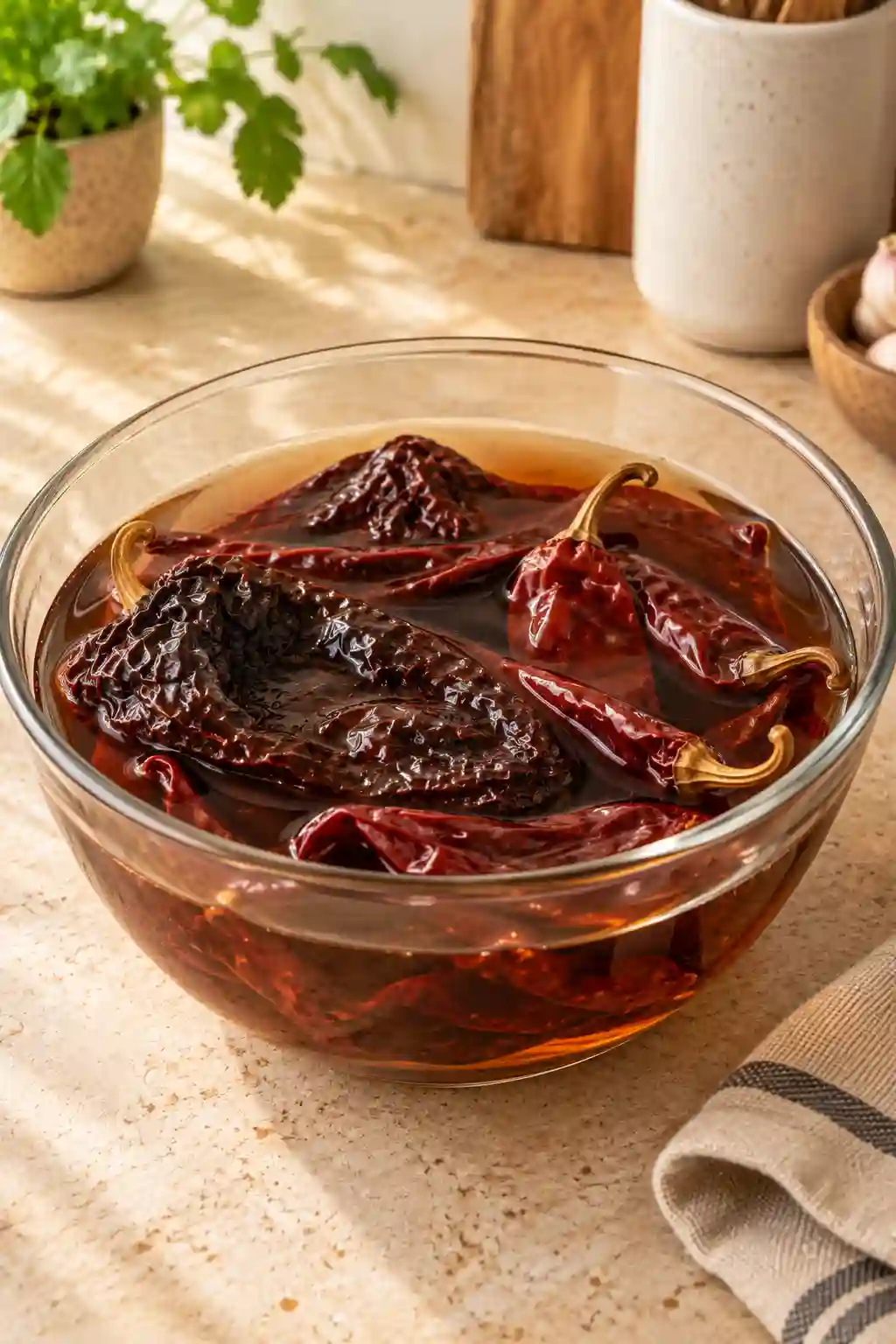
Transfer the toasted chiles to a large bowl and cover them with about 3 cups of hot water, or enough to fully cover them.
Soak for 15 minutes, or until the chiles are very soft and rehydrated.
Transfer the softened chiles to a food processor or blender. Keep the soaking liquid nearby in case you decide to use some of it when adjusting the sauce.
3. Cook the Onion, Garlic, and Spices
While the chiles are soaking, heat 1 tablespoon olive oil in a medium pan.
Add the ½ small chopped onion and cook for 4–5 minutes, until softened.
Add the 4 chopped garlic cloves and cook for another 30 seconds to 1 minute, until fragrant.
Stir in:
- 2 tablespoons tomato paste, optional
- ½ teaspoon Mexican cinnamon
- ½ teaspoon cumin
- ½ teaspoon Mexican oregano
- ½ teaspoon sugar, optional
- Salt to taste
Cook for 1 minute, stirring.
4. Add the Broth
Pour in ½ cup chicken broth and stir to combine.
Reduce the heat and simmer the mixture for 5 minutes.
If you prefer a thinner sauce, the recipe allows up to 1 cup of chicken broth, but it is better to add extra liquid gradually rather than all at once.
5. Blend the Adobo Sauce
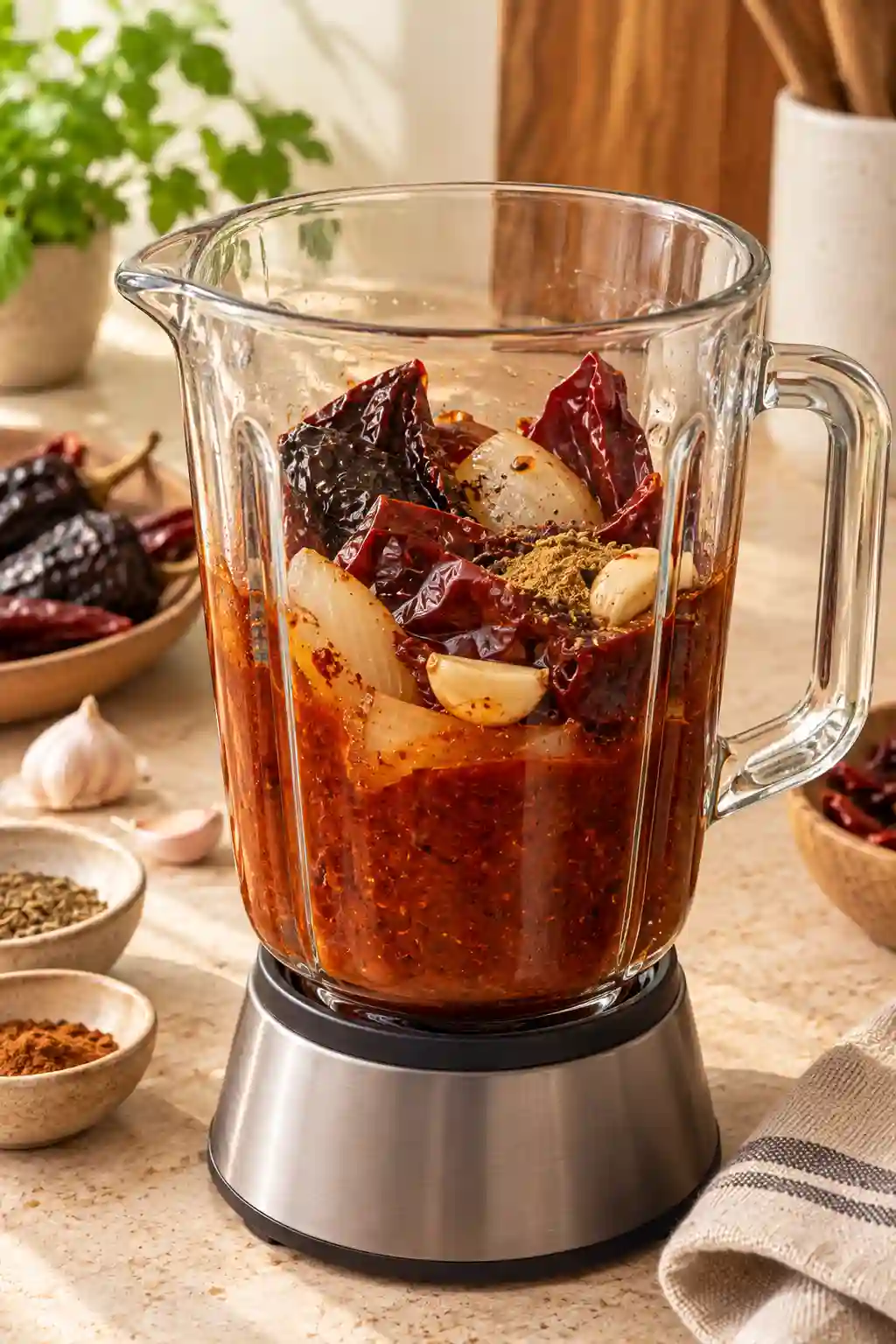
Transfer the cooked onion and spice mixture to the food processor with the softened chiles.
Add:
- 3 tablespoons apple cider vinegar
- ¼ to ½ cup fresh water, or some of the reserved chile-soaking liquid
Process until smooth.
6. Adjust the Consistency and Seasoning
Taste the sauce and adjust the salt and optional sugar as needed.
If the sauce is thicker than you want, add a little more water or broth and blend again until it reaches your preferred consistency.
For a thinner, smoother sauce, strain it after blending. Otherwise, you can use it as-is.
Is Adobo Sauce Spicy?
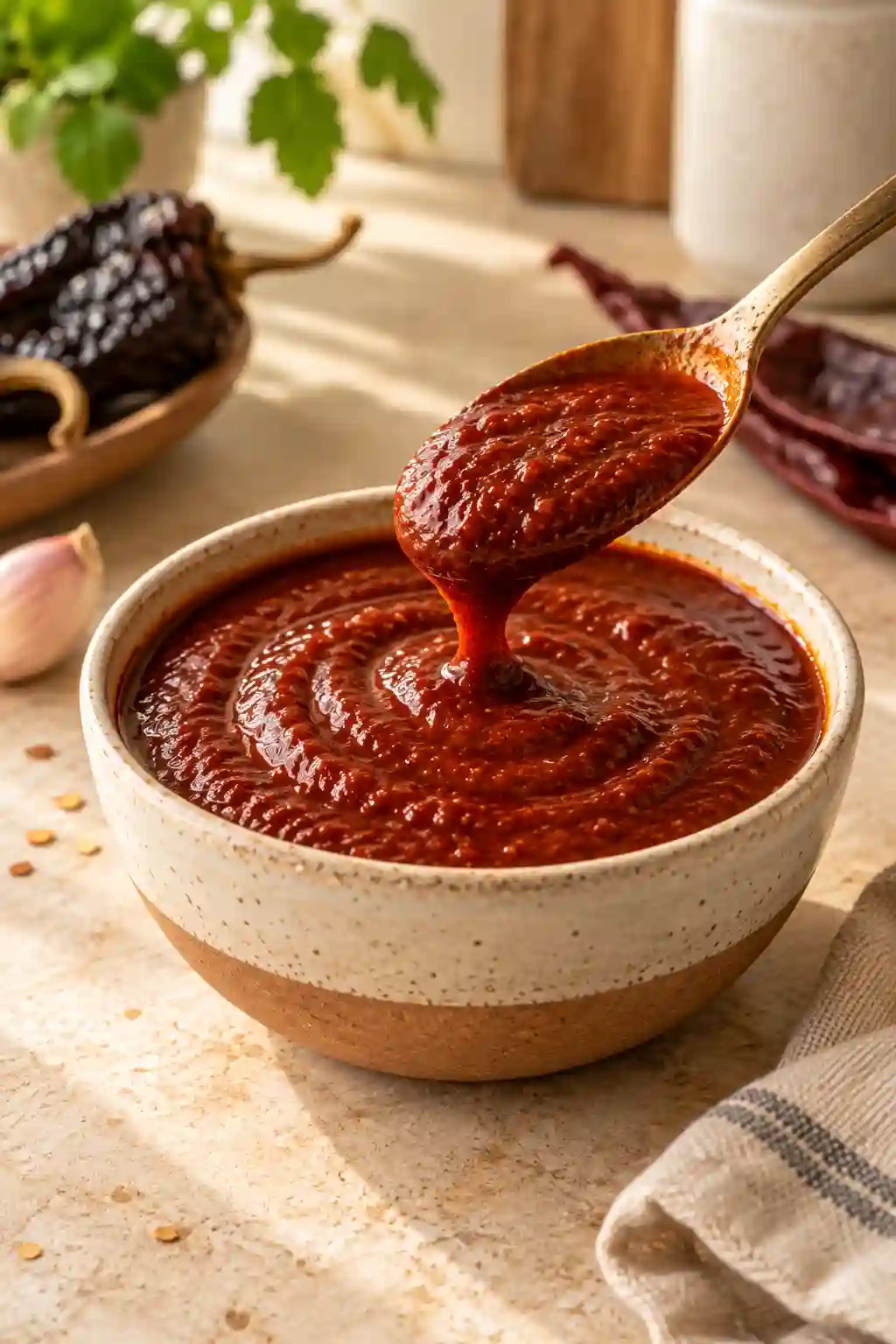
Adobo sauce can be mildly to moderately spicy, but the heat level depends on the chiles used and how the sauce is prepared. This recipe uses ancho and guajillo chiles, with the stems and seeds removed before toasting and soaking.
Because no additional hot chile is included in the base recipe, the sauce is intended to emphasize the flavor of the dried chiles rather than intense heat. However, chile heat can vary naturally from pepper to pepper, so the finished sauce may not taste exactly the same every time.
How to Make Adobo Sauce Less Spicy
For a milder sauce:
- Remove the stems and seeds as directed.
- Do not add hotter chiles or extra chile powder.
- Use the optional tomato paste, which can soften the overall chile character.
- Add the liquid gradually so the sauce stays balanced rather than overly concentrated.
How to Make Adobo Sauce Spicier
If you prefer more heat, a hotter chile can be added to the recipe, but the exact amount should be adjusted carefully according to the chile being used.
Because this version has not been provided with a tested hot-chile variation, it is better to add extra heat gradually rather than use an unverified fixed ratio.
How to Use Adobo Sauce
Adobo sauce works best as a flavorful cooking sauce, marinade, or seasoning base for savory dishes. Its chile, vinegar, garlic, and spice profile makes it useful in recipes where you want a deeper red-chile flavor without turning the dish into a separate sauce-heavy preparation.
Use It as a Marinade
Adobo sauce can be used to coat chicken, pork, or other proteins before cooking. Because the sauce already contains vinegar, garlic, chiles, and spices, it can add both seasoning and acidity in one step.
Use only as much as needed to coat the food evenly rather than completely submerging it.
Add It to Tacos and Enchiladas
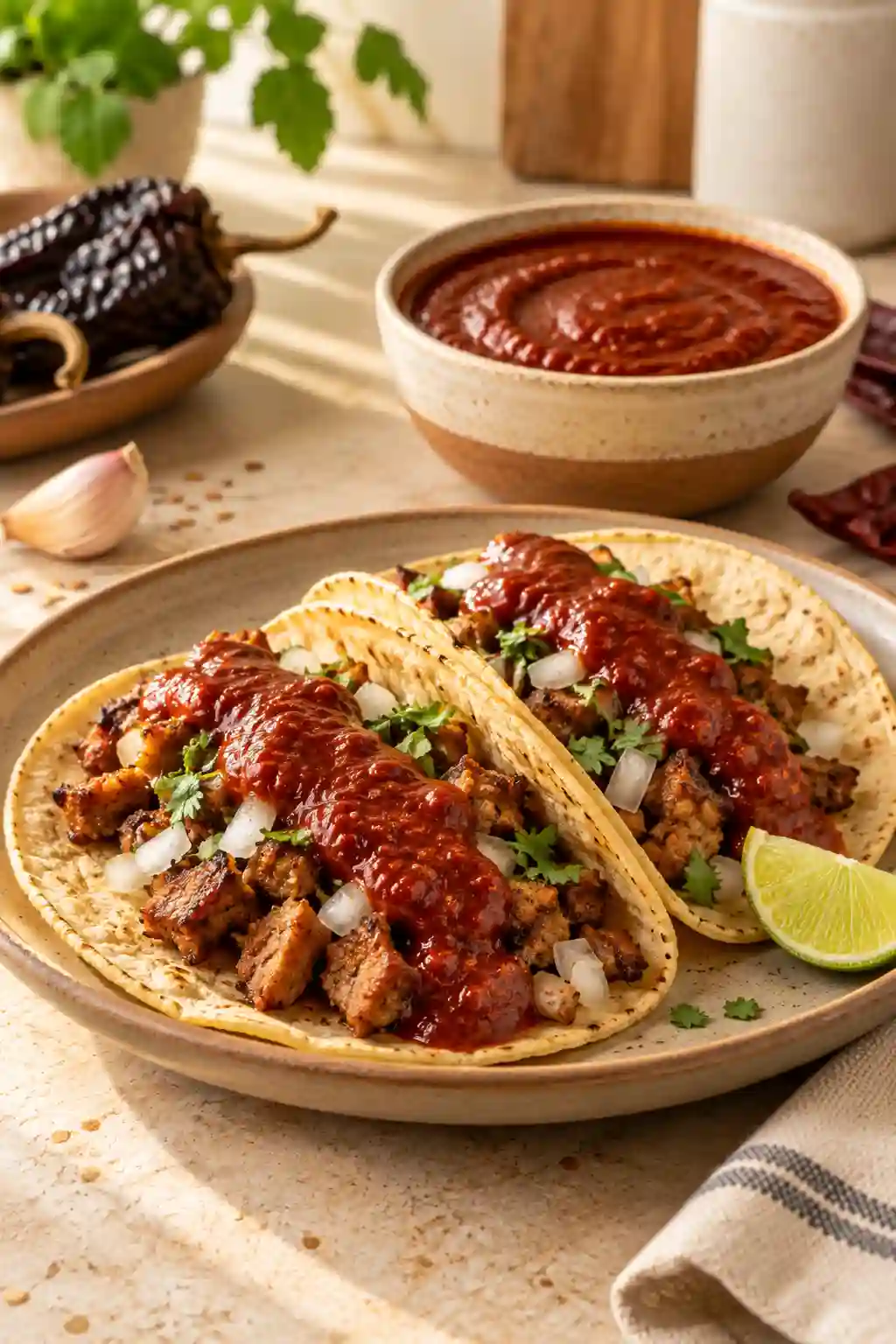
A spoonful of adobo sauce can add chile flavor to taco fillings, shredded meats, or enchilada preparations.
Start with a small amount, mix it through the filling or sauce base, then add more if you want a stronger chile presence.
Stir It Into Beans, Soups, and Braises
Adobo sauce can also be stirred into beans, soups, stews, and braised dishes where a richer chile base is useful.
Because the sauce is concentrated, add it gradually and taste as you go so it supports the dish rather than overpowering it.
Use It as Part of a Sauce Collection
If you regularly make sauces from scratch, this adobo can sit alongside other homemade options in your collection of sauce recipes. The best choice depends on the flavor profile you want in the final dish.
How to Store Adobo Sauce
Store homemade adobo sauce in a clean, airtight container once it has cooled. Keeping the sauce sealed helps protect its texture and flavor while it is refrigerated or frozen.
Refrigerator Storage
Let the sauce cool before transferring it to an airtight container and placing it in the refrigerator. A container with a tight-fitting lid helps limit air exposure and keeps the sauce from absorbing odors from other foods.
If the sauce thickens after chilling, stir it before use. You can also add a small amount of water or broth if a thinner consistency is needed for the dish you are making.
Can You Freeze Adobo Sauce?
Yes, adobo sauce can be frozen if you want to store it in portions for later use. Divide the cooled sauce into freezer-safe containers or small portions so you can thaw only what you need.
Thaw the sauce in the refrigerator before using it. After thawing, stir it well; if the texture has separated slightly, blending it briefly can help restore a smoother consistency.
Adobo Sauce Troubleshooting
A few common texture and flavor problems can usually be traced to chile preparation, blending, or the amount of liquid used. Use the table below to identify the likely cause before making small adjustments.
| Problem | Likely Cause | What to Do |
|---|---|---|
| Bitter flavor | The dried chiles may have toasted too far | Toast the chiles only until flexible and slightly puffed, and avoid any burned areas. |
| Sauce is too thick | Not enough blending liquid | Add a small amount of water or broth gradually and blend again until the consistency is right for your use. |
| Grainy texture | The chiles may not have softened fully or the sauce may need more blending | Blend longer until smoother. Strain the sauce if you want a finer texture. |
Adobo Sauce vs. Chipotle Sauce
Adobo sauce and chipotle sauce are related, but they are not the same. This recipe uses ancho and guajillo chiles, while chipotle sauce is built around smoked jalapeño chiles.
| Feature | This Adobo Sauce | Chipotle Sauce |
|---|---|---|
| Main chile profile | Ancho and guajillo chiles | Usually chipotle-forward |
| Smoke level | Less smoke-focused | More smoky |
| Flavor profile | Tangy, earthy, and warmly spiced | Smoky, tangy, and chipotle-forward |
| Best uses | Marinades, tacos, enchiladas, beans, and braises | Dishes where a stronger smoky chile flavor fits |
Chipotles in adobo are different again: they are smoked chipotle peppers packed in an adobo-style sauce.
What Can I Use Instead of Adobo Sauce?
If you do not have adobo sauce, the best substitute depends on what the recipe needs most: dried-chile flavor, smokiness, acidity, or a seasoned sauce base. No single replacement will match this homemade Mexican-style adobo exactly, so choose the option that best fits the dish you are making.
Best Substitutes for Adobo Sauce
| Substitute | Main Difference | Best Use |
|---|---|---|
| Chipotle sauce | A different chile profile from this adobo | When extra smokiness fits the dish |
| Sauce from chipotles in adobo | More strongly centered on chipotle | When a smoky chile flavor works with the recipe |
| Mild red chile sauce | The acidity, spices, and chile profile may differ | When you mainly need a seasoned red-chile sauce base |
Can I Use Chipotle Sauce Instead of Adobo Sauce?
Yes, but treat it as an alternative rather than an exact replacement. Use it when the flavor difference is acceptable for the dish, rather than as a true one-to-one substitute.
Can I Use Chipotles in Adobo Instead?
Yes, the sauce surrounding canned chipotles can work in some recipes. Add it gradually so you can control how much it changes the overall flavor of the dish.
What Is the Closest Replacement for Adobo Sauce?
The closest replacement is usually a homemade seasoned red-chile mixture with acidity and aromatics rather than an exact store-bought equivalent. A mixture based on dried red chiles, vinegar, garlic, and seasonings can reproduce more of the basic structure of Mexican-style adobo than a sauce centered mainly on chipotle.
PrintAdobo Sauce Recipe
This Mexican-style adobo sauce recipe combines dried ancho and guajillo chiles with onion, garlic, apple cider vinegar, broth, and warm spices. The chiles are toasted, rehydrated, and blended with the cooked aromatics until smooth, with the consistency adjusted to taste.
- Prep Time: 10 minutes
- Cook Time: 15 minutes
- Total Time: 25 minutes
- Yield: 1.5 cups (24 tablespoons) 1x
- Category: Sauce
- Method: Stovetop, Blended
- Cuisine: Mexican
Ingredients
- 4 dried guajillo chiles, stems and seeds removed
- 4 dried ancho chiles, stems and seeds removed
- 3 cups hot water, or enough to fully cover the dried chiles
- 1 tablespoon olive oil
- ½ small onion, chopped
- 4 garlic cloves, chopped
- 2 tablespoons tomato paste, optional
- ½ teaspoon Mexican cinnamon, or regular cinnamon
- ½ teaspoon ground cumin
- ½ teaspoon Mexican oregano, or regular oregano
- ½ teaspoon sugar, optional, plus more to taste if needed
- Salt, to taste
- ½ cup chicken broth, with up to 1 cup total for a thinner sauce
- 3 tablespoons apple cider vinegar
- ¼ to ½ cup fresh water or reserved chile-soaking liquid, as needed for blending
Instructions
- Remove the stems and seeds from the guajillo and ancho chiles. Split the chiles open if that makes the seeds easier to remove.
- Heat a large skillet over medium-high heat. Toast the dried chiles for a couple of minutes on each side, just until they become more flexible and begin to puff slightly. Do not let them burn.
- Place the toasted chiles in a large bowl and cover them with the hot water. Let them soak for about 15 minutes, or until fully softened and rehydrated. Transfer the softened chiles to a blender or food processor and keep the soaking liquid nearby.
- While the chiles are soaking, heat the olive oil in a medium pan. Add the chopped onion and cook for 4–5 minutes, until softened.
- Add the garlic and cook for another 30 seconds to 1 minute, stirring until fragrant.
- Stir in the optional tomato paste, cinnamon, cumin, oregano, optional sugar, and salt. Cook for 1 minute, stirring to combine.
- Pour in ½ cup chicken broth, reduce the heat, and simmer for 5 minutes.
- Transfer the cooked onion mixture to the blender or food processor with the softened chiles. Add the apple cider vinegar and ¼ to ½ cup fresh water or reserved soaking liquid.
- Blend until smooth. If the sauce is thicker than you prefer, add a little more water or broth and blend again.
- Taste and adjust the salt and optional sugar as needed. Strain the sauce for a finer, thinner texture, or leave it unstrained for a fuller consistency.
Notes
- Makes about 1.5 cups, or 24 tablespoons.
- Tomato paste is optional and can be omitted for a more chile-forward sauce.
- Use up to 1 cup of chicken broth if you prefer a thinner consistency.
- Add the final blending liquid gradually so you can control the thickness.
- Straining is optional and can be used for a finer, smoother sauce.
- Avoid over-toasting the dried chiles.
Nutrition
- Serving Size: 1 tablespoon
- Calories: 14
- Sugar: 1 g
- Sodium: 15 mg
- Fat: 1 g
- Saturated Fat: 0.1 g
- Unsaturated Fat: 0.6 g
- Carbohydrates: 2 g
- Fiber: 0.5 g
- Protein: 0.3 g
Frequently Asked Questions About Adobo Sauce
These questions cover a few practical points that are not already answered in the main recipe, including how Mexican adobo is used, what the sauce tastes like, and what to expect from store-bought options.
Do Mexicans use adobo?
Yes, adobo is used in Mexican cooking, but recipes and techniques vary by region and dish. Mexican adobo commonly refers to a chile-based preparation used for seasoning, marinating, or cooking savory dishes, so it is better understood as a family of preparations rather than one fixed recipe.
Can I buy just adobo sauce?
Yes, but store-bought products vary, and many are sold as chipotle peppers packed in adobo sauce rather than as a standalone Mexican adobo sauce. Check the label carefully so you know whether you are buying plain adobo sauce, chipotles in adobo, or dry adobo seasoning, since these products are not the same.
What does adobo sauce taste like?
Adobo sauce is savory, tangy, chile-forward, and warmly spiced, although the exact flavor depends on the chiles and seasonings used. In this recipe, ancho and guajillo chiles form the base, while vinegar adds acidity and garlic, onion, cumin, oregano, and cinnamon add aromatic depth.
Final Thoughts
This Mexican-style adobo sauce is a versatile chile-based sauce that can be adjusted for consistency and used across a range of savory dishes. If you need an alternative, choose a substitute based on whether the dish needs chile flavor, smokiness, acidity, or a seasoned sauce base, since no replacement will match the ancho-and-guajillo version exactly.